
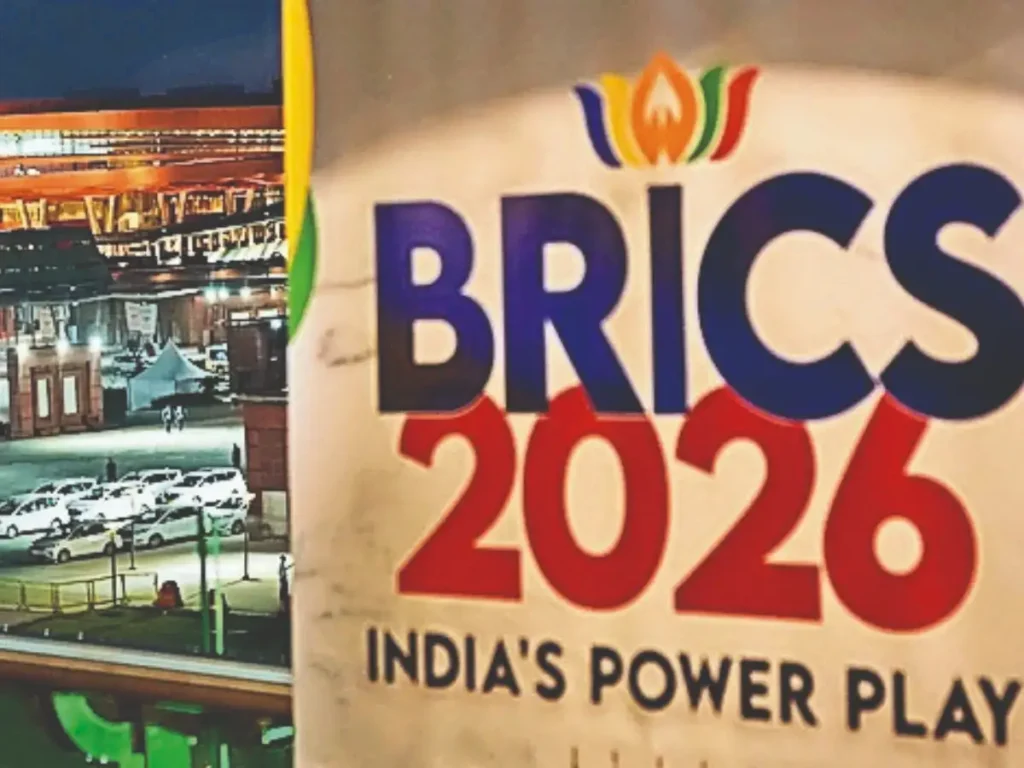
Beyond bloc politics: India’s BRICS bet on multipolarity
Under India’s BRICS chairmanship, the article argues for practical, people-centric cooperation focused on development, technology, health, startups, MSMEs, climate finance, and infrastructure.
Under India’s BRICS chairmanship, the article argues for practical, people-centric cooperation focused on development, technology, health, startups, MSMEs, climate finance, and infrastructure.
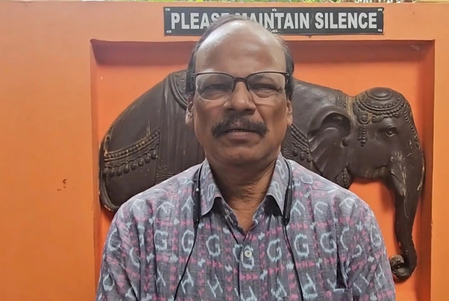
Foreign affairs expert Manas Behera said the 18th BRICS Summit under India’s presidency highlights BRICS as a platform for a multipolar world order, with agenda items including expansion, de-dollarization, climate, AI, peace and security.
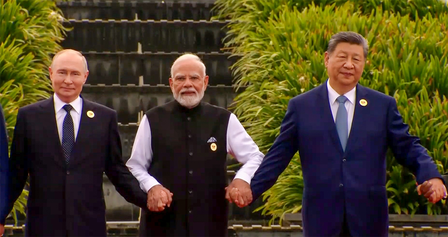
The 2026 BRICS New Delhi Summit has renewed attention to the Russia-India-China axis, with BRICS serving as a broader multilateral framework to manage bilateral frictions and expand cooperation.
Rosatom CEO Alexey Likhachev said nuclear cooperation has become an important pillar of BRICS partnership, helping member states address economic, technological, and supply-chain challenges.
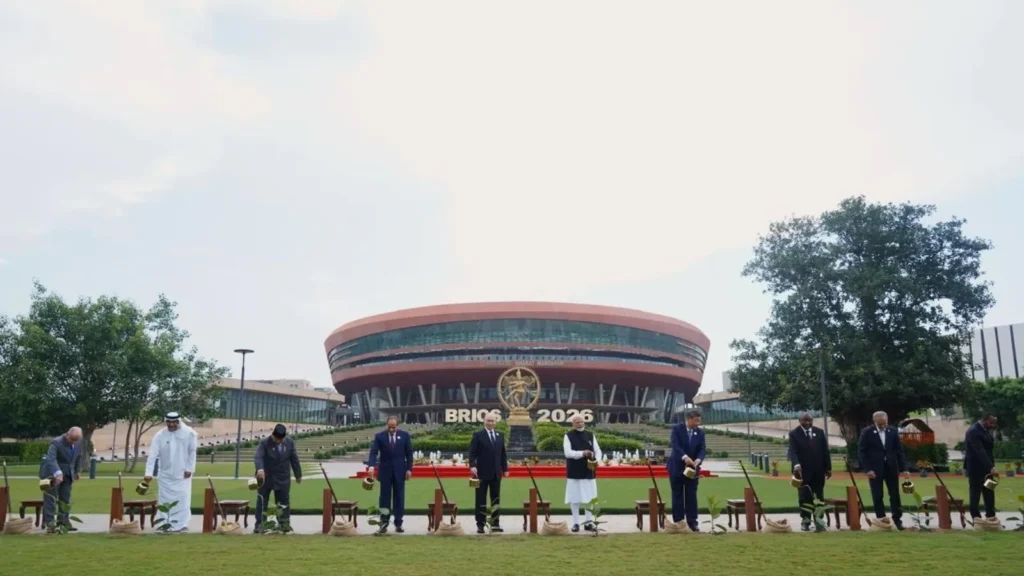
The article says the Delhi BRICS declaration emphasizes practical cooperation and political diversity rather than forming an anti-Western bloc or pursuing de-dollarisation.

At their summit in New Delhi, BRICS leaders adopted a joint declaration expressing concern over Middle East tensions and urging restraint, while reaffirming support for the multilateral trading system.
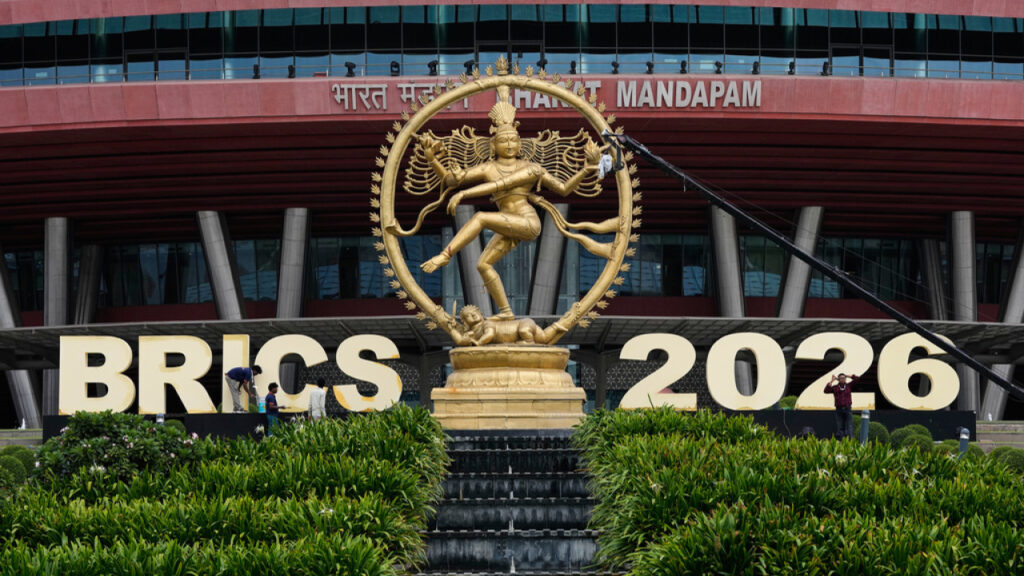
BRICS leaders call for maximum restraint in the Middle East conflict while China and India commit to resolving border differences.
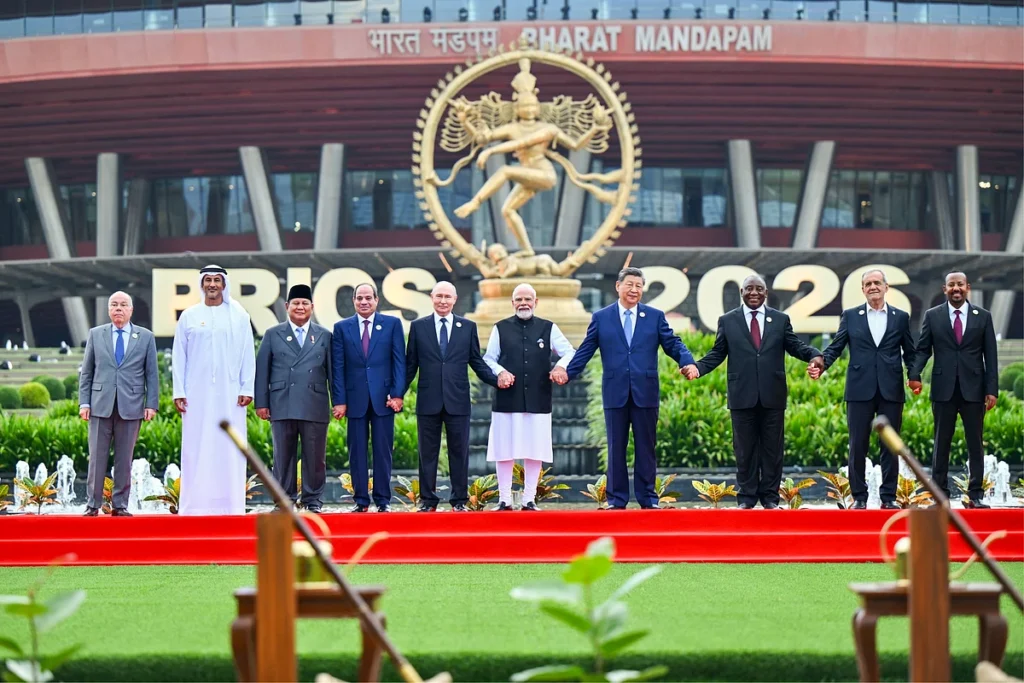
The New Delhi Declaration shows BRICS evolving into a broader cooperation platform on trade, finance, technology, development, climate, energy, infrastructure and global governance.
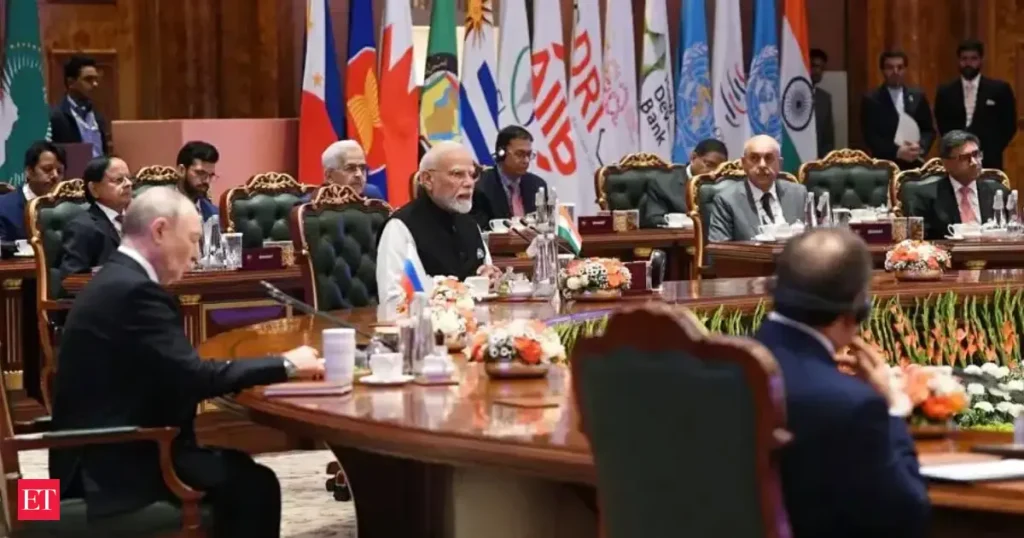
BRICS countries reaffirmed plans to deepen cooperation on sustainable transport infrastructure through policy, investment, technology and capacity building, while promoting sustainable aviation fuels and new BRICS transport initiatives.