BRICS Member States Condemn Unilateral Sanctions
BRICS member states condemned unilateral coercive sanctions in the Delhi Declaration of the 18th BRICS summit, saying they violate international law and affect human rights.
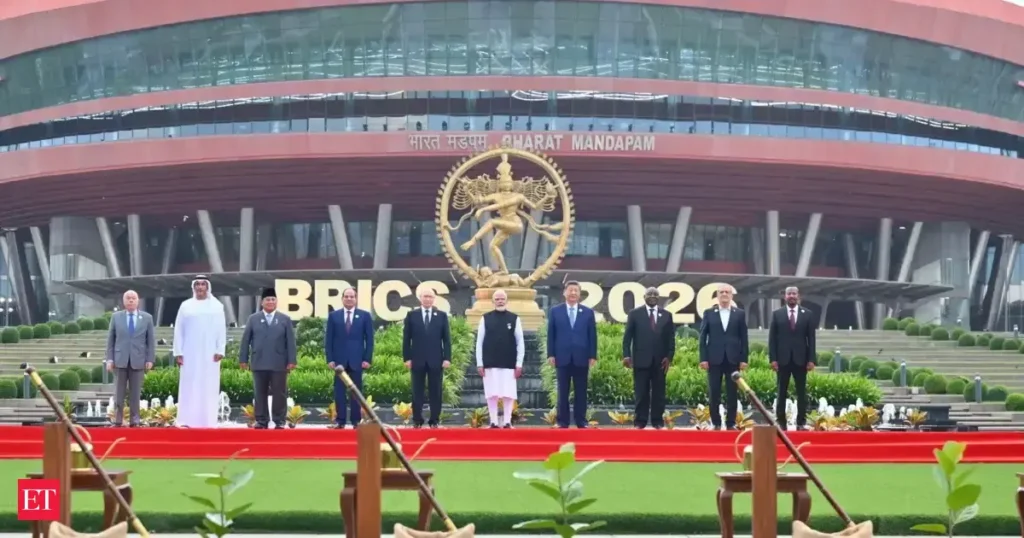
BRICS leaders, including Russian President Vladimir Putin, planted a banyan tree at the summit in New Delhi as a symbol of unity, coinciding with the group’s 20th anniversary and discussions on economic, financial and global governance cooperation.
BRICS negotiators agreed on a joint declaration expected to be approved by leaders, while internal differences over Iran and the UAE complicated the talks.
The article argues that BRICS has strengthened the Global South’s influence against unilateralism, protectionism and Western dominance over global governance.
At the 18th BRICS Summit in New Delhi, Prime Minister Narendra Modi joined leaders in a tree plantation, underscoring climate action and green diplomacy.
As global order faces turbulence, BRICS is emerging as a key platform for Global South countries seeking greater strategic and economic space.
BRICS Summit 2026 outcomes under India’s chairship include plans to expand trade finance for MSMEs, strengthen global value chains, and support startups through proposed funds and networks.
BRICS leaders called for reliable, diversified and resilient critical minerals supply chains, with greater value addition and more equitable participation of developing countries in higher-value global manufacturing.
At the 18th BRICS Summit in New Delhi, BRICS members unanimously adopted a joint declaration on multilateral reform, terrorism, trade, security and future cooperation, while PM Modi outlined five priorities for BRICS.