
Yet another chance to reset the future
Source: Business Recorder | Original Published At: 2025-07-02 21:51:34 UTC
Key Points
- Pakistan faces severe climate vulnerability, with 2022 floods causing $15 billion in damages, necessitating flood defenses and early warning systems.
- Military standoff with India in May 2025 strengthened national unity and regional standing.
- Economic crisis marked by $74 trillion public debt, 68% of GDP, and low savings rate (13%) compared to regional peers.
- China-Pakistan Economic Corridor (CPEC) needs expansion into Afghanistan/Central Asia and potential India linkages.
- BRICS+ engagement proposed for technology transfers in agritech, digital finance, and renewables.
- Call for institutional reforms: NFC reform, SOE privatization, energy sector modernization, and anti-corruption measures.
- Shariah-compliant finance (sukuk, Zakat/Ushr) suggested to mobilize domestic capital and reprofile 50% of debt.
- Need for international-standard feasibility studies in energy, mining, tourism, and agribusiness to attract FDI.
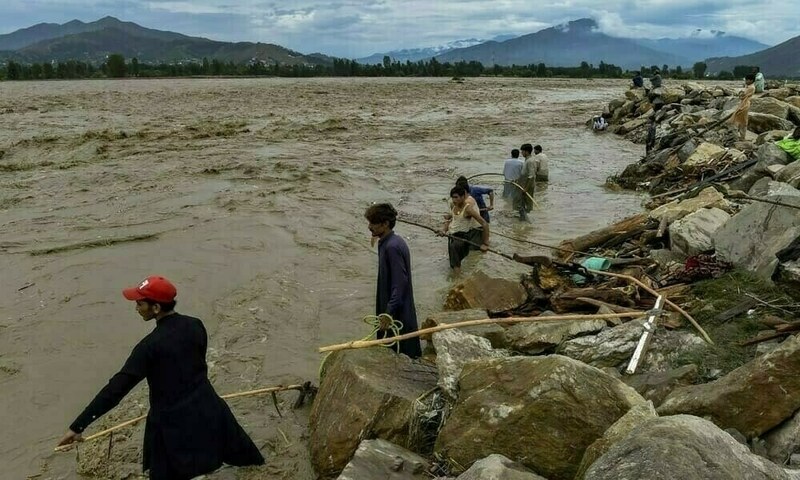
On the morning of June 27, the Swat River, usually a tranquil ribbon winding through the valleys, suddenly roared to life. Families who had gathered by its banks found themselves fighting a wall of water. Within minutes, around a dozen lives were lost. Sirens never blared, rescue helicopters never arrived, and administrative teams showed up only after the river had receded, leaving homes and hopes in ruins. Pakistan is now among the world’s most climate vulnerable countries, with 2022 floods alone causing nearly $15 billion in damages, this underscores the urgent need for flood defenses, real-time warning systems, and strict land use regulation to prevent escalating monsoon disasters.
Only weeks earlier, Pakistan had leapt onto the global stage by prevailing in a four-day exchange with India in the month of May. What began as tit-for-tat strikes over the Pahalgam false flag could have unravelled our unity. Instead, our air force once more reestablished its air supremacy, our military forces stood firm, rival parties paused their quarrels, and even Washington and Beijing urged calm. In that ordeal, Pakistan emerged victorious, and more importantly, unified. We almost got this glory furthered as an important regional and global player in Iran-Israel conflict.
This stark contrast: vulnerability was laid bare and strength reclaimed, offers another chance for our nation. Out of nowhere, we have regained serious traction: as a stabilizer in South Asia, as a trusted partner in the Islamic world on security and development, and as a country capable of both weathering storms and commanding respect. The real challenge is to turn this fleeting goodwill into lasting prosperity.
In my last column titled “The Missed Century”, I emphasized that no South Asian nation prospers in isolation. Reviving that promise requires a new imagination of integration. The China–Pakistan Economic Corridor must evolve from isolated highways into a mesh of trade and energy connectivity, westward into Afghanistan and Central Asia, and, when the time is right, eastward toward India. Our engagement with BRICS+ should go beyond observer status; it must translate into technology transfers in agritech, digital finance, and renewable energy; co-financed, co-managed, and locally adapted.
Since independence, Pakistan has struggled to build a resilient economy: its path repeatedly derailed by entrenched patronage networks and chronically misaligned priorities. Despite receiving major aid during the Cold War and post-9/11 eras, the country failed to translate this support into gains in agricultural productivity or industrial capacity. Instead, consumption surged while structural fundamentals stagnated. Today, the economy remains trapped in a cycle of circular debt, periodic bailouts, and policy inertia. A rent-seeking political economy lies at the core of this dysfunction, where vested interests have hollowed out institutions, undermined regulatory oversight, and crippled the state’s capacity to deliver basic services.
As of March 2025, public debt has reached PKR 74 trillion (68 percent of GDP), with debt servicing costs crowding out development spending and constraining every budgetary choice. Pakistan’s Gross National Savings Rate, at just 13 percent (2023), is the lowest in South Asia (compared to 35 percent in Bangladesh, 31 percent in India, and 27 percent in Sri Lanka). Exports remain stuck around US$ 30 billion, while rising imports widen the trade deficit and erode reserves, if it weren’t for remittances from expats, the situation wouldn’t remain sustainable even for three months. Meanwhile, state-owned enterprises like PIA, Pakistan Railways, and the DISCOs have cost the exchequer PKR 5.8 trillion in cumulative losses. Inequality is stark: the top 10 percent of households control 60 percent of national wealth and 43 percent of total income, while half the population owns no land and just 5 percent of assets.
Reversing this decline demands vision and discipline. The illusion of reform-through-austerity must be replaced with genuine fiscal and governance restructuring. Reform of the National Finance Commission (NFC) is vital to ensure equitable, development-focused allocations. Local governments must be empowered; the federal and provincial bureaucracies trimmed; and loss-making SOEs either privatized or restructured. In the energy sector, a strategic shift toward hydropower, solar, and nuclear, coupled with efforts to cut transmission losses (18% in FY24), can ease pressure on public finances and improve supply stability.
An inclusive Islamisation of the economy is now an imperative — not as tokenism, but as a lever for social equity and domestic capital mobilisation. Tools like Zakat and Ushr can help formalize the informal sector, broaden the tax base, and enhance welfare delivery.
To put it in perspective, approximately PKR 2 trillion of additional federal revenue can be generated from applying Ushr on annual basis. At the same time, infrastructure financing must increasingly rely on sukuk instruments, reducing dependence on interest-bearing debt while unlocking Shariah-compliant capital.
At least 50 percent of Pakistan’s debt should be reprofiled toward sukuks, paving the way for sustainable growth rooted in ethical finance. With the right strategic alignment, Pakistan can position itself as a regional hub for Shariah-compliant green finance and a model for Islamic development that is modern, inclusive, and sustainable.
These measures must be reinforced through institutional reforms of the FBR, Board of Investment, and Planning Commission to expand fiscal capacity and reduce inefficiencies.
Following diplomatic gains in May 2025, Pakistan must negotiate a five-year debt rollover; not merely for short-term liquidity relief, but to create fiscal space for critical investments in education, healthcare, and flood resilience. Yet even this window will close quickly if institutions remain hamstrung by corruption and mismanagement.
Pakistan scored just 27/100 on Transparency International’s 2024 Corruption Perceptions Index, ranking 135th out of 180 countries. Small and medium enterprises continue to face suffocating bureaucratic red tape, while foreign direct investment, just US$ 1.78 billion in Jul–Apr FY25, remains far below the levels needed to drive sustainable growth.
To attract serious capital, Pakistan must produce international-standard, dollar-based, bankable feasibility studies, particularly in energy, mines & minerals, tourism, logistics, and agribusiness. This effort must be supported by streamlined approvals, transparent cross-ministerial coordination, and consistent federal–provincial alignment. A unified, pro-investment posture is no longer optional; it is the precondition for economic recovery and long-term resilience.
And while we look forward, we must also look inward. We cannot afford to repeat the patterns of crippled democratic regimes or that of Ayub’s entitlement, Yahya’s recklessness, Zia’s paranoia, or Musharraf’s ad hocism. Each era, in its own way, mortgaged our future: sometimes to foreign capital, sometimes to internal repression, and often to miscalculated wars or fleeting global favor. We cannot afford another lost decade. Reform must be institutional, not individual; strategic, not opportunistic; and inclusive, not elitist.
As Lee Kuan Yew declared in his final National Day Rally, “We are going to live only one life. If we have to die, we will die for a cause.” That cause today is a Pakistan that seizes this golden opportunity: turning trials into triumphs, rebuilding stronger, and harnessing the traction we have unexpectedly regained across South Asia, the Islamic world, and beyond. But to translate this moment into lasting transformation, we must heed another of Lee’s enduring calls: “Get our ablest and our best into politics.” The time has come to abandon apathy, cynicism, and mediocrity. Pakistan’s revival demands competence, meritocracy, and courage to lead from the front.
History will judge us not by the storms we endure or the skirmishes we survive, but by the resolve we show in responding to them. It is rare for a nation on the brink to be pulled back into the fold of global relevance; rarer still is one that recognizes the moment and rises to meet it. Pakistan must now choose not survival, but purpose. And this — perhaps our last — is yet another chance.