
Trump threat to BRICS over ditching the dollar: what he can do, what it will mean for US, India
Source: The Indian Express | Original Published At: 2024-12-02 06:08:30 UTC
Key Points
- US weaponization of global financial systems (SWIFT exclusion of Iran/Russia) drives global de-dollarization efforts
- Trump threatens 100% tariffs on BRICS nations if they create alternative currency
- India's rupee internationalization faces challenges with Russia due to sanctions and trade imbalance
- China-Russia trade in local currencies reaches 90% level, contrasting India-Russia dynamics
- Jaishankar clarifies India seeks multipolarity but not active de-dollarization
- Experts warn US tariffs could backfire by shifting trade to third countries
- IMF notes gradual decline in dollar reserves with rise of non-traditional currencies
Ever since the US chose to weaponise the global financial infrastructure by throwing Iran (in 2012) and Russia (in 2022) out of the Society for Worldwide Interbank Financial Telecommunication (SWIFT), key to international financial transactions, countries across the globe have been looking to reduce dependence on the US dollar as well as the US-led global financial system.
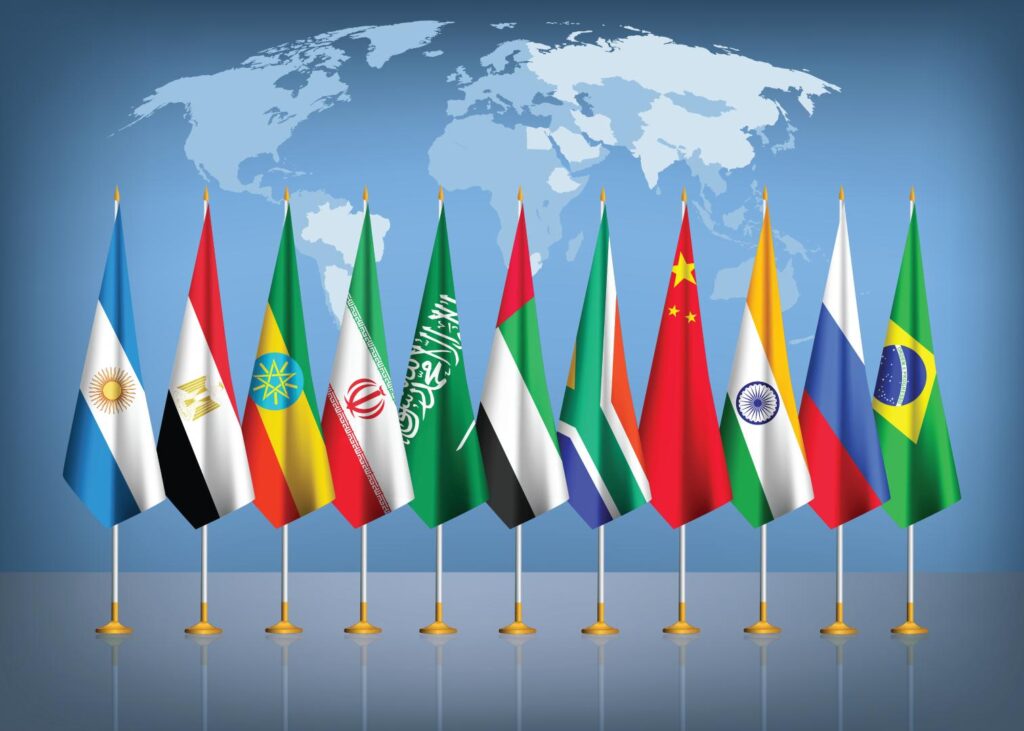
Perceiving these growing attempts as a threat to the US dollar’s domination, US President-elect Donald Trump has threatened Brazil, Russia, India, China, and South Africa (BRICS nations) with 100 per cent tariffs if they create a new BRICS currency or back any other currency to replace the US dollar as the world’s reserve currency.
“The idea that the BRICS countries are trying to move away from the dollar while we stand by and watch is OVER. We require a commitment from these countries that they will neither create a new BRICS currency nor back any other currency to replace the mighty U.S. dollar, or they will face 100 per cent tariffs and should expect to say goodbye to selling into the wonderful U.S. economy. They can go find another ‘sucker!’ There is no chance that the BRICS will replace the US dollar in international trade, and any country that tries should wave goodbye to America,” Trump said in a social media post on Saturday.
This comes after Russian President Vladimir Putin at the BRICS summit in October said: “The dollar is being used as a weapon. We really see that this is so. I think that this is a big mistake by those who do this.”
However, Prime Minister Narendra Modi at the summit said that BRICS should not acquire the image of one that is trying to replace global institutions.
India’s efforts towards rupee internationalisation
Trump’s threat comes at a time when US sanctions on Russia resulted in Russian oil being redirected from Europe to Asia. In an effort to reduce reliance on the US dollar and to internationalise the Indian rupee, the Reserve Bank of India allowed invoicing and payments for international trade in Indian rupees in 2022, after sanctions were imposed on Russia amid the Ukraine war.
Also in Explained | Why India’s trade deficit is not necessarily a weakness
Notably, foreign exchange market turnover (daily averages), as per the BIS Triennial Central Bank Survey 2022, shows the US dollar is the dominant vehicle currency, accounting for 88 per cent of the global forex turnover. The rupee accounted for 1.6 per cent. The survey stated that if rupee turnover rises to equal the share of non-US, non-Euro currencies in global forex turnover of 4 per cent, it will be regarded as an international currency.
However, India’s trade with Russia in domestic currency remains low due to Indian banks’ fear of US sanctions and an unbalanced trade relationship between the two countries. While there has been a multifold rise in India-Russia trade after the Ukraine war, it has been firmly in favour of Russia. India’s exports to Russia stood at $4.2 billion in FY24, but increasing oil imports from Moscow have widened the import bill to $61 billion. As a result, Russia has a huge pile of rupee reserves that it has not been able to use to settle bilateral trade using domestic currency, and is instead using it to invest in Indian stocks and bonds.
On the contrary, bilateral trade between Russia and China in domestic currency has jumped. A more balanced Russia-China trade has helped transactions using the yuan and rouble. China-Russia trade in 2023 crossed a record $240-billion mark. The Russian government said that over 90 per cent of the bilateral trade settlement is now in Russian roubles.
‘Not trying to target the US dollar’
External Affairs Minister S Jaishankar in October said that while India is pursuing its trade interests, avoiding the use of the US dollar is not part of India’s economic policy.
Jaishankar said US policies often complicate trade with certain countries, and India is seeking “workarounds” without intending to move away from the dollar, unlike some other nations. However, the minister added that a multipolar world will eventually be reflected in “currencies and economic dealings”.
“What I will say is that we have a natural concern. We often have trade partners who lack dollars for transactions. So, we must decide whether to forgo dealings with them or find alternative settlements that work. There’s no malicious intent towards the dollar,” Jaishankar said in response to a question at the Carnegie Endowment for International Peace, an American think tank in Washington, during an interaction in October.
‘Threats impractical and counterproductive’
International trade experts said that while the US dollar dominates global trade—accounting for over 90 per cent of transactions—it is not the only currency used internationally. Other convertible currencies like the Japanese yen, the euro, and the British pound are also integral to global commerce, and the United States has not objected to their use. The proposed BRICS currency is simply an extension of these existing alternatives.
“It is the actions of the United States that have pushed many countries to seek alternatives to the US dollar. The US has a history of leveraging its influence over global financial systems, such as the SWIFT network, to impose unilateral sanctions. SWIFT is essential for secure and standardised international financial transactions. By blocking countries like Russia and Iran from accessing SWIFT, the US has effectively weaponised the global financial infrastructure, forcing other nations to find alternative payment mechanisms to continue legitimate trade,” former trade officer and head of think tank Global Trade Research Initiative, Ajay Srivastava, said.
Srivastava said that a 100 per cent tariff on BRICS countries could backfire. “Imports into the US would simply shift to third countries, potentially increasing costs for American consumers without bringing manufacturing jobs back home. The US has become less competitive in manufacturing labour-intensive goods due to higher production costs, and tariffs are unlikely to reverse this trend,” he said.
‘China keen to dominate’
Federation of Indian Export Organisations (FIEO) Director General & CEO Ajay Sahai said that while supporting local currency initiatives, India should ensure the framework does not disproportionately favour China, given the asymmetry in economic power among BRICS nations.
“China is very keen to assume a dominant role to use the bloc against the US, though India, Brazil, and South Africa are more keen to work with the US and settle the differences amicably through negotiations,” Sahai said. He said that India should engage diplomatically with the US to explain its position, emphasising that diversifying trade mechanisms is not anti-American but a move towards multipolarity and financial stability.
“We should accelerate the development and internationalisation of its digital currency (CBDC) and financial platforms like UPI to take a leadership role in BRICS currency initiatives. Trump’s threat might amplify geopolitical tensions, but it is unlikely to deter BRICS nations from pursuing alternatives to the US dollar. For India, the best course is a balanced approach: supporting financial reforms within BRICS that align with its interests while maintaining strong ties with the US to safeguard its broader strategic and economic priorities,” he said.
Meanwhile, the IMF’s Currency Composition of Official Foreign Exchange Reserves (COFER) points to a gradual decline in the dollar’s share of central bank and government foreign reserves. However, the reduced role of the US dollar over the past two decades has not been matched by corresponding increases in the shares of the other “big four” currencies—the euro, yen, and pound, according to the IMF.
“Rather, this has been accompanied by a rise in the share of what we refer to as non-traditional reserve currencies, including the Australian dollar, Canadian dollar, Chinese renminbi, South Korean won, Singaporean dollar, and the Nordic currencies,” the IMF said.
The IMF in July this year said that one nontraditional reserve currency gaining market share is the Chinese renminbi, whose gains match a quarter of the decline in the dollar’s share.
“The Chinese government has been advancing policies on multiple fronts to promote renminbi internationalisation, including the development of a cross-border payment system, the extension of swap lines, and piloting a central bank digital currency. It is thus interesting to note that renminbi internationalisation, at least as measured by the currency’s reserve share, shows signs of stalling out,” IMF said.