
China’s high-profile SCO summit: Who’s attending and what’s on the agenda?
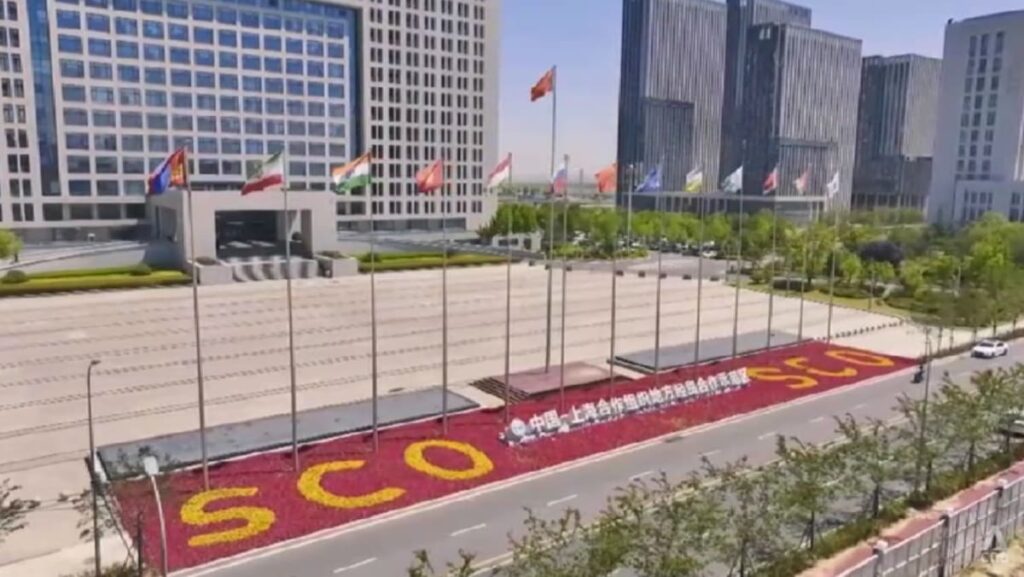
Source: CNA | Original Published At: 2025-08-30 01:08:03 UTC
Key Points
- SCO summit in Tianjin gathers over 20 leaders including Xi Jinping, Putin, Modi
- ASEAN's expanded participation highlights growing China-ASEAN trade ties (US$234B in Q1 2025)
- Belt and Road Initiative and digital infrastructure discussed as key cooperation areas
- Indonesia (BRICS member) and Malaysia's China-friendly stances noted
- SCO now includes 10 nations accounting for 42% of global population
BEIJING: Chinese President Xi Jinping will welcome more than 20 world leaders at the Shanghai Cooperation Organization (SCO) summit on Sunday (Aug 1).
The two-day meeting in the northeastern port city of Tianjin will be the regional security forum’s largest yet, at a time when geopolitical and trade tensions are simmering.
Xi will host a high-profile guest list that includes Russian President Vladimir Putin and India’s Prime Minister Narendra Modi, alongside leaders from the Middle East, Central Asia and South Asia.
United Nations Secretary-General Antonio Guterres and Association of Southeast Asian Nations (ASEAN) Secretary-General Kao Kim Hourn will also be in attendance.
The expanded presence of ASEAN is notable. Leaders from five member states will be at the summit, including Indonesian President Prabowo Subianto, Malaysian Prime Minister Anwar Ibrahim and Vietnamese Prime Minister Pham Minh Chinh.
The Southeast Asian bloc is China’s top trading partner, with total trade in the first quarter this year reaching 1.7 trillion yuan (US$234 billion), marking a 7.1 per cent year-on-year increase.
Analysts said the US tariffs on China during the 2018 trade war planted the seeds for Chinese manufacturers to pivot to Southeast Asia.
Today, those seeds have taken root and branched out into emerging domains like digital infrastructure. At the same time, projects under the Belt and Road Initiative continue to grow.
Beyond the show of diplomatic alignment, ASEAN leaders could also take the chance to expand trade and investment exchanges at the summit.
“Indonesia is a BRICS member now, and Malaysia under Anwar has taken a clear China-friendly and West-sceptical bent,” said Brian Wong, a fellow at the University of Hong Kong’s (HKU) Centre on Contemporary China and the World.
“Yet, their attendance is largely and likely non-committal – keen to engage but not keen to be nominally subsumed into what is widely perceived as a Sino-Russian-led military and security cooperation forum.”
SCO & MILITARY PARADE
The SCO was founded in 2001 with a goal of enhancing regional security and stability. It has since expanded to 10 nations: China, Russia, Kazakhstan, Kyrgyzstan, Tajikistan, India, Pakistan, Iran and Belarus.
Membership accounts for an estimated 42 per cent of the world’s population and around a quarter of global gross domestic product (GDP).
The grouping is seen by some as Eurasia’s answer to United States-led frameworks like the North Atlantic Treaty Organization (NATO) and Group of Seven (G7), and acts as a counterweight to Western influence.