
India-China bonhomie owes much to Trump’s push
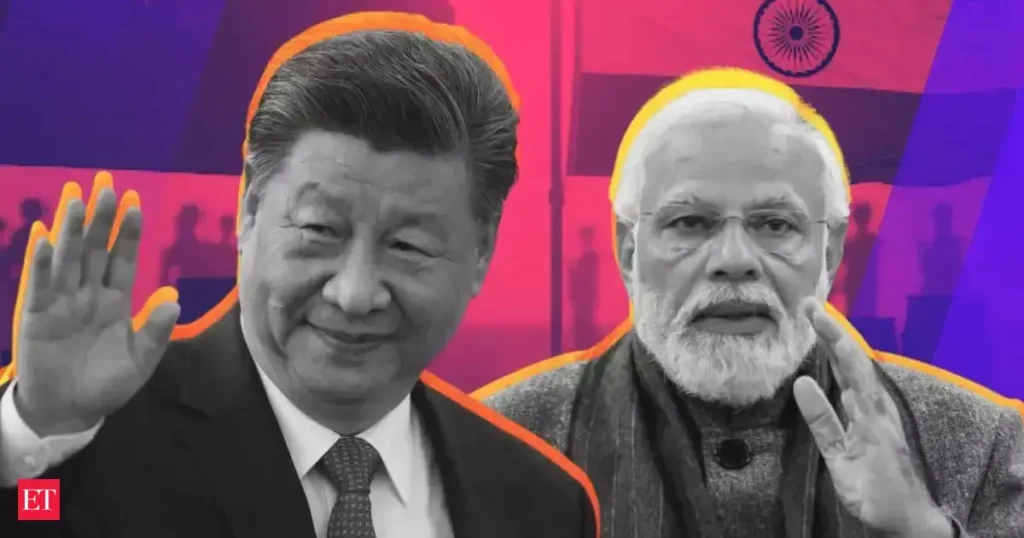
Source: The Economic Times | Original Published At: 2025-08-19 07:25:23 UTC
Key Points
- India-China trade ties recalibrate with China lifting export restrictions on critical materials
- Trump's tariffs on India created strategic alignment incentives between India and China
- Joint ventures in manufacturing and technology transfer remain contentious negotiation points
- Record $99.2 billion trade deficit highlights India's structural dependencies on China
- Border tensions persist despite diplomatic thaw and confidence-building measures
China has lifted export restrictions on fertilisers, rare earth minerals and magnets, and tunnel boring machines to India — a step that marks fresh momentum in trade ties between the two neighbours. The breakthrough follows talks last month between External Affairs Minister S Jaishankar and Chinese Foreign Minister Wang Yi. On his current two-day visit to India, Wang assured Jaishankar that Beijing had already acted on New Delhi’s requests, with shipments of the restricted items understood to be underway, according to officials.
The development points to a pragmatic recalibration in ties. Both countries recognise that cooperation in critical sectors can ease supply chain pressures and create room for stability in an uncertain global order. Rather than a reset born of sentiment, this is a calculated opening: collaborate where interests align, manage differences carefully, and build predictability into a fraught relationship.
Relations between Washington and New Delhi soured after President Donald Trump moved to double tariffs on Indian goods to 50%, including an extra 25% hit linked to India’s purchases of Russian oil. The rupture threatens years of growing alignment in tech and security meant to check China. Beijing, meanwhile, has every reason to welcome the friction.
Since Xi Jinping and Narendra Modi met on the sidelines of the BRICS summit in Kazan (October 2024), the two sides have ticked off confidence-building steps NYT and Economic Times both spotlight: easing visa restrictions, discussing direct flights and re-opening religious pilgrimages. China allowed Indian pilgrims to visit sites in Tibet in June; India, for its part, resumed issuing tourist visas to Chinese nationals on 24 July after a five-year freeze.
Chinese Foreign Minister Wang Yi is in India on a two-day visit, his first in over three years, to meet External Affairs Minister S. Jaishankar. The trip could also set the stage for Prime Minister Narendra Modi’s first visit to China in seven years, for a regional summit in Tianjin that will be attended by Xi Jinping and Vladimir Putin, according to the New York Times.
Yet a favourable sentiment remains absent, as Beijing continues to strengthen roads, rail links and border villages along the frontier, while both capitals intensify their competition across the Indian Ocean. Amitabh Kant, former G20 Sherpa, ex-NITI Aayog CEO, and the architect of India’s production-linked incentive (PLI) schemes, laid out the uncomfortable truth in a CNBC-TV18 interview.
India should get China to manufacture with us. We need joint ventures with China, especially for components and a wide range of inputs that go into manufacturing. To bring down input and component costs in strategically important areas, India must work with China, Kant said. His prescription is to revisit Press Note 3 (2020), a policy that tightened scrutiny on foreign direct investment (FDI) from land-border neighbours such as China, Pakistan, Nepal, Bangladesh, Bhutan, Myanmar and Afghanistan.
Industry executives say others are preparing to follow. Epack Durable, PG Electroplast, Amber Enterprises and Karbonn Mobile are among the companies pursuing partnerships with Chinese firms to secure components and build local capacity. Auto-parts makers are also weighing their options. Lumax Autotech, for instance, is planning an engineering and sourcing hub in China to stay plugged into EV technology.
India ended the 2024-25 fiscal year with a record trade deficit of $99.2 billion with China, driven largely by a surge in imports of electronics and consumer durables, according to commerce ministry data. The gap widened sharply in March, when imports from China jumped more than 25% year-on-year to $9.7 billion. Electronics, electric batteries and solar cells led the inflows. Over the full year, Chinese imports rose to $113.5 billion.
Exports told a very different story. India’s shipments to China fell 14.5% in March to $1.5 billion and slid to $14.3 billion for the full fiscal year, a decline that leaves them lower than in 2013-14, despite a stronger rupee at that time.
China closed the year as India’s second-largest trading partner, with two-way trade of $127.7 billion, behind only the United States. Officials say the government is planning to set up a dedicated monitoring unit to track surges in cheap imports, particularly from China, and has cautioned domestic firms against helping foreign exporters reroute goods to evade US tariffs.
President Trump signed an order extending a US–China trade truce by three months, to 10 November, to keep a lid on tariffs and export controls. They’ve been dealing quite nicely, the relationship is very good with President Xi and myself, he said at the White House.
Let’s break it down. The frontier still sets the rules of the India-China game. Disengagement at Demchok and Depsang (October 2024) reduced immediate risk, and the 34th WMCC meet on 23 July made incremental progress. Still, 50,000–60,000 troops remain on each side of the LAC in eastern Ladakh. Beijing wants to de-link the border from the rest of the relationship; Delhi won’t.
India’s priorities are clear: technology, components and predictable market access — under guardrails. According to the Economic Times, a trade package covering rare earth magnets, fertilisers and pharmaceuticals is under discussion. Delhi also wants tangible de-escalation along the border and respect for its red lines: bans on certain apps, screening of sensitive investments, and no green light for BYD factories for now.
India has already blocked the Chinese carmaker from setting up plants and banned apps like TikTok. Beijing’s demands are just as pointed: fewer restrictions on firms and visas, political distance between India and US-led coalitions, and an end to one-way tech transfers.
On whether Donald Trump’s pressure is forcing engagement, he is clear: No, both are following their national interests and their own style of resolving issues politically and bilaterally. And on India’s effort to reduce reliance on Beijing: Yes, because we know the negative aspects of Chinese imports and we are realistically reducing our dependence on Chinese products. Consequently, we are promoting vocal for local and a self-reliant Bharat by 2047.