
Source: India Today | Original Published At: 2025-10-13 07:45:05 UTC
Key Points
- PM Modi skips US-Egypt co-chaired Gaza peace summit despite personal invitation from Egyptian President El-Sisi
- India cites Pakistan factor and Trump's mediation claims as key reasons for Modi's absence
- Tensions with Pakistan escalated after April 2025 Pahalgam attack and India's retaliatory measures
- India-US relations strained over Trump's 50% tariffs on Indian goods linked to Russian oil purchases
- Modi-Trump interactions remain cautious despite recent diplomatic engagements
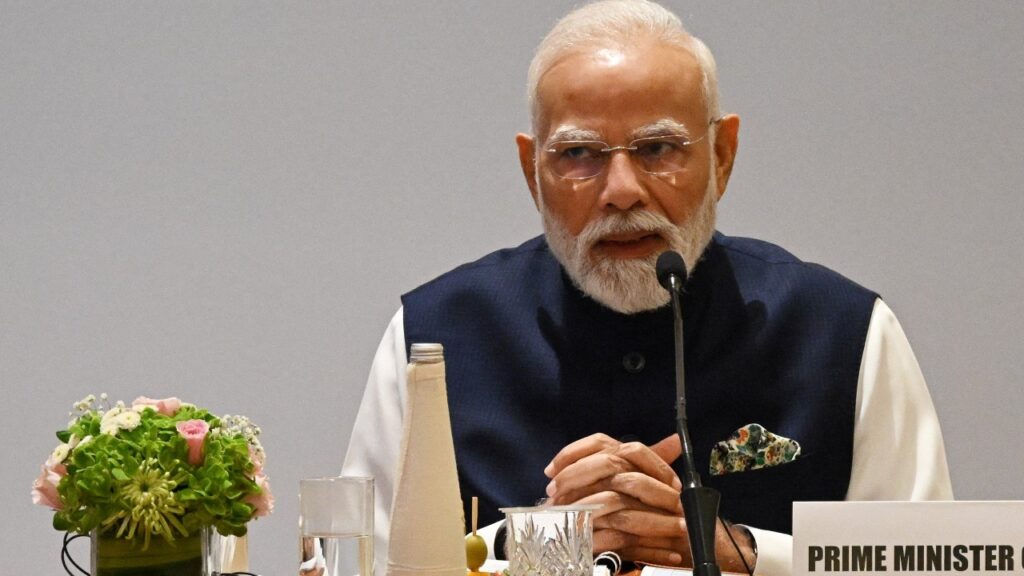
As world leaders gather in Egypt today to finalise the framework for the US-brokered Gaza peace plan, Prime Minister Narendra Modi will stay away. Instead, Minister of State Kirti Vardhan Singh will represent India at the high-level summit co-chaired by US and Egyptian Presidents Donald Trump and Abdel Fattah El-Sisi.
Despite a personal invitation from El-Sisi, PM Modi’s decision to skip has set off speculation about why he’s not attending the gathering in Sharm el-Sheikh where over 20 world leaders will meet to finalise the framework of a peace deal and discuss Gaza’s post-war reconstruction.
THE PAKISTAN FACTOR
The April 22 Pahalgam attack, carried out by Pakistan-backed terrorists and claiming the lives of 26 people, mostly tourists, along with India’s retaliatory Operation Sindoor, led to a sharp escalation of tensions between the two neighbours.
India, in response, also suspended the Indus Waters Treaty and closed the Attari-Wagah checkpost, among other diplomatic measures against Pakistan.
At the 25th Shanghai Cooperation Organisation (SCO) summit in China last month, PM Modi, in the presence of his Pakistani counterpart, flagged “certain nations” backing terrorism.
PM Modi said India has suffered the “brunt of terrorism” for four decades and, following the Pahalgam attack, “it is natural to raise whether the open support of terrorism by some countries can be acceptable to us. We have to unanimously oppose terrorism in every form and colour. This is our duty towards humanity”.
A video from the summit circulated on social media showing PM Modi and Russian President Vladimir Putin walking past Sharif as top leaders lined up for a group photograph.
In July, Sharif had extended an olive branch for “meaningful talks” with India, but it went unheeded.
TRUMP FACTOR?
Just last month, Prime Minister Modi skipped a virtual meeting of Brics leaders convened by Brazilian President Luiz Incio Lula da Silva to discuss trade disruptions caused by US President Donald Trump’s sweeping tariffs.
India was represented by External Affairs Minister S Jaishankar.
Relations between India and the US soured after President Trump imposed 50 per cent tariffs on India as punishment for continuing Russian oil purchases despite repeated warnings. India has urged the US to lift the levies, arguing that affordable energy is crucial for its 1.4 billion citizens.
The impasse remains despite recent talks between the two sides.
After Trump imposed the tariffs, PM Modi reportedly refused to take calls from the US President at least four times. But on his 75th birthday last month, the Prime Minister finally spoke with the President when he called to offer his wishes.
In recent days, the two leaders have engaged several times, including when PM Modi welcomed Trump’s 20-point peace deal to end the war in Gaza.
On October 9, the Prime Minister again dialled Trump, congratulating him on the success of the peace plan, while also reviewing the “good progress” in bilateral trade negotiations.
Despite the renewed bonhomie, Trump has again repeated his claims of ending the India-Pakistan conflict. Just two days before receiving the call from the Prime Minister, the President reiterated that his repeated threats of imposing sanctions had helped prevent several conflicts from escalating, including the one between India and Pakistan.
“If I didn’t have the power of tariffs, you would have at least four of the seven wars raging. If you look at India and Pakistan, they were ready to go at it. Seven planes were shot down… I don’t want to say exactly what I said, but what I said was very effective,” he told reporters on October 7.
India has repeatedly rejected Trump’s claims, saying the ceasefire with Pakistan was agreed through direct talks between the two countries’ military operations chiefs.
In June, while PM Modi was in Canada attending the G7 Summit, Trump had invited him for a stopover in Washington to discuss the situation with Pakistan.
The Prime Minister, however, declined the invite, a rarity for a world leader, amid the US President’s claims of mediating the ceasefire, as well as the Pakistan Army chief’s visit to Washington at the time.
This time too, India likely wanted to avoid giving Trump another opportunity to claim credit for easing India-Pakistan tensions at an event where both leaders would be present.