
New BRICS, new voice for Global South
Source: The Express Tribune | Original Published At: 2024-01-14 06:20:06 UTC
Key Points
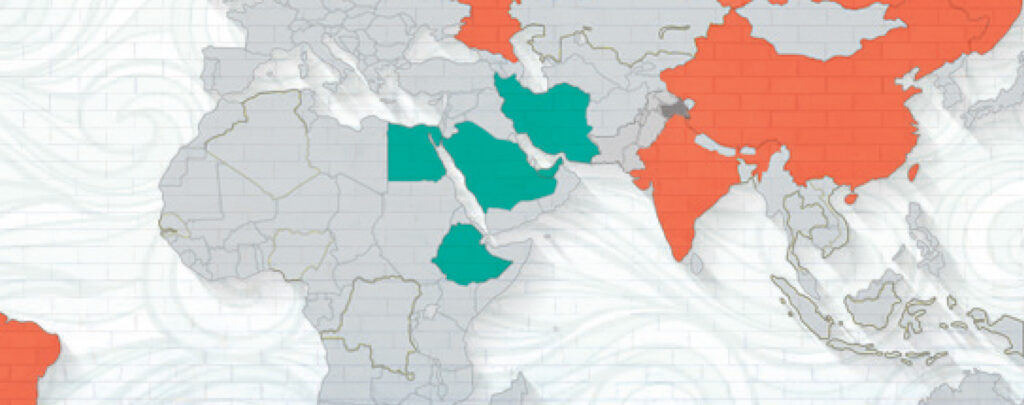
- BRICS expansion includes Saudi Arabia, UAE, Egypt, Iran, and Ethiopia, now representing 45% of global population and 28% of the economy.
- Middle East crisis highlights geopolitical divisions between the West and Global South, with BRICS positioning itself as an alternative to US-led order.
- BRICS discusses creating a common currency to counter US dollar hegemony and promote trade in local currencies.
- New members enhance BRICS' influence in global energy markets, controlling ~44% of crude oil production.
- UAE and Saudi Arabia's financial resources could strengthen BRICS' New Development Bank and economic initiatives.
- Analysts suggest BRICS aims to promote multilateralism, challenge Western economic sanctions, and support Global South development.
This week was an eventful one for the ever-escalating crisis in the Middle East, with a few critical developments on both the Gaza and Red Sea fronts. The International Court of Justice took up a case brought forth by BRICS member South Africa to prevent the genocide of Palestinians in Gaza at the hands of Israel. The first two days of proceedings, which saw the legal representatives of South Africa and Israel present their opening arguments, drew contrasting reactions from the ‘West and the rest’.
While much of the Global South and sympathetic voices in the Western nations hailed South Africa, some key governments from the Global North rejected outright the main premise of the case. Germany declared its intention to intervene on Israel’s behalf as a third party in the ICJ and dismissed the accusation of genocide while affirming its support for Israel’s right to self-defence. The United States and Canada, similarly, announced that they believed the case was ‘baseless’, even as Israel’s brutal offensive in Gaza has claimed more than 23,000 lives, over 10,000 of them children.
Meanwhile, in response to months of attacks by Houthi forces on Red Sea shipping, the United States and United Kingdom launched dozens of air strikes across Yemen in what marked a serious escalation in the conflict. US President Joe Biden held up the strikes as a ‘clear message that the United States and our partners will not tolerate attacks on our personnel or allow hostile actors to imperil freedom of navigation.’ The leaders of Yemen’s Houthi forces vowed to continue their attacks on shipping for as long as Israel’s war on Gaza continues while threatening that ‘all American-British interests have become legitimate targets for the Yemeni armed forces.’
As with the proceedings in ICJ, the reactions to the strikes by the US and the UK highlighted the sharp split between the West and the region. While the nations seen as part of the US-led world order framed the development as ‘defensive’ and tried to isolate it from Israel’s war in Gaza, Middle Eastern nations, including Saudi Arabia, Egypt and Iran voiced grave apprehension and called for avoiding escalation.
This month, Saudi Arabia, Egypt and Iran, along with the United Arab Emirates and Ethiopia, formally became part of the BRICS bloc, accepting the invitation extended to them by the five titular members at last year’s summit in Johannesburg. Together, the 10 nations now represent 45 per cent of the world’s population and, with a combined economy worth over $28.5 trillion, account for roughly 28 per cent of the global economy. With the inclusion of the new members, they will also be producing about 44 per cent of the world’s crude oil.
Political divergences
While most of the analytical output on the potential and future of BRICS has focused on economy and trade implications, the timing of developments in the ongoing conflict in the Middle East draws sharp attention towards the expanded grouping’s political impact. Under the US-led Western world order, the Global South has often found itself a silent spectator to unilateral geopolitical actions. A mix of militarism and economic ‘carrots and sticks’ have left many nations with no choice but to face the fallout, such as in the case of American intervention in Iraq and Afghanistan. Issues that have been the direct result of those ill-thought out wars continue to plague both those countries and their neighbours to this day.
Similar unilateralism appears evident in the Israel-Palestine and Red Sea crisis – despite calls for tackling the root of the issue, the United States has been upping the ante. Both Washington and other Western governments have also sought to compartmentalise the two even though those issues and many others that plague the Middle East and the rest of the Muslim world remain interconnected.
A recent opinion piece for China Daily by Sri Lankan analyst Maya Majueran, which explored the positive political influence an expanded BRICS can wield, touched upon this aspect. Washington and its Western allies, Majueran wrote, have long imposed their own policies and values on other nations under pretext of promoting and safeguarding democracy and human rights. ‘Worse, they have been bullying some emerging market and developing economies, forcing them to take sides in disputes with countries that don’t adhere to the Western-centric ideology and policies.’
These double standards, the analyst pointed out, were starkly evident from the contrast between US support for Israeli aggression and the pressure Washington put on Global South nations to condemn Russia’s actions in Ukraine. The BRICS, so far, appear to be focused on bringing about a ‘fairer’ world order for the Global South, Majueran argued. ‘The Global South wants to improve the existing world order because it is unfair and Western-centric,’ he wrote.
Global economic overhaul
One tool the United States has frequently used to keep global governments in line with its geopolitical and geoeconomic aims has been its currency. The US dollar, the Sri Lankan analyst wrote, has allowed Washington to perpetuate its hegemony. The sanctions and trade restrictions the US placed on nearly 40 countries that run counter to American objectives have resulted in immense hardships for nearly half of the world’s population.
BRICS discussions to bring about an alternative currency for global trade transactions could result in potent counter to what Majueran termed the ‘weaponisation of the US dollar’. ‘If BRICS’ plan to adopt a common currency to conduct global trade is successful… it could break the dollar’s global hegemony and make it easy for emerging economies to conduct free trade in currencies other than the dollar,’ he suggested.
In an interview with Sputnik a few days after Iran formally joined BRICS, the country’s deputy foreign minister voiced interest in an alternative to the dollar. ‘We are interested in creating a unified currency in the BRICS group, and this could be very effective,’ Mahdi Safari said. ‘By using national currencies, the process of eliminating the use of the dollar in commercial exchanges begins, and we are interested in continuing this process,’ he added.
BRICS members Russia and Iran have already officially abandoned the SWIFT payment system for cross-border transactions. Instead, the two countries will initiate payments to settle international trade using direct transfers between the banks of both countries.
An article carried by the UAE state-owned English-language daily The National anticipated more bilateral trade in local currencies following the inclusion of new members into BRICS. ‘The implication we are watching closely from the addition of Saudi Arabia, the UAE and Egypt to BRICS is the potential for more bilateral trade in local currencies, particularly following the UAE and India’s agreement reached in July, and Egypt being in similar discussions with India already,’ the article quoted Carla Slim, an economist at Standard Chartered Bank, as saying. India has already started purchasing UAE oil in Indian rupees.
The article also expected that calls for overhauling the international monetary system and developing a US dollar alternative would grow with BRICS expansion – ‘…even if less relevant today, the emergence of BRICS common currency can act as a major harbinger in diversifying risks away from the stronghold of the dollar,’ it quoted Dubai-based professor of finance Ullas Rao as saying.
Infusion of finance
Up until last year, analysts, especially in Western publications, consistently downplayed the potential of BRICS and emphasised how its five titular member nations, collectively, had failed to live up to economic expectations. The formal inclusion of oil- and finance-rich Saudi Arabia and the UAE could allow the grouping to challenge that perception and enable it to empower new economic initiatives, such as the New Development Bank.
‘The image of Brics in the past was of a financially vulnerable group, beholden to the global political superpowers. The financial power of Saudi and the UAE as net exporters of capital to the rest of the world will substantially change that perception,’ the National quoted Gary Dugan, chief investment officer at Dalma Capital, as saying. ‘Also as a collective, we expect Saudi Arabia and the UAE to be afforded easier access to the growth markets of the BRICS countries on favourable terms,’ he added.
An analysis by the Stimson Center last year explored in particular the impact the UAE could have as a member of the BRICS, particularly on the NDB initiative, which has faced difficulties particularly due to Western sanctions against Russia.
‘The UAE could inject much-needed liquidity into the NDB,’ the analysis noted, adding that the Gulf nation’s substantial financial resources, including its sovereign wealth fund, could be leveraged to provide direct capital contributions. ‘Moreover, the UAE’s expertise in finance and infrastructure development could be valuable in structuring and managing NDB projects efficiently, attracting more funding from both within and outside the BRICS alliance,’ the analysis added.
Energy factor
With the inclusion of Saudi Arabia, Iran and the UAE, the BRICS grouping can now boast of being a major player in the world’s energy market. China and India are already the second and third biggest consumers of oil in the world with strong ties to Gulf countries. The two other new entrants, Egypt and Ethiopia, also provide BRICS a firm foothold in one of the world’s major shipping corridors, from the Horn of Africa to the Suez Canal.
Iran’s deputy foreign minister Safari, in his interview with Sputnik, highlighted the positive role the expanded BRICS could play in terms of energy in particular. ‘The most important problem is represented by three issues: the first is energy production, the second is energy transfer, and the third is energy consumption. I can say that these three issues are being solved by BRICS.’
Experts quoted by the UAE-state-owned The National underscored the influence the expanded BRICS now had on the world’s oil and energy markets. ‘The addition of two major oil exporters … will reinforce their bargaining power and influence in OPEC+ while also offering the space for them to align their strategies with other BRICS members,’ it quoted commodities and emerging markets expert Ehsan Khoman as saying. By virtue of its influence on OPEC+, the BRICS grouping is poised to become a powerful voice for the Global South, Khoman added.
‘The prospect of Saudi Arabia, the UAE, Iran and Egypt joining BRICS creates new mechanisms that forces a degree of political co-operation by all the countries,’ said Ayham Kamel, another expert quoted in the article. ‘The Arab countries are looking for improving their global geopolitical influence and appear committed to avoiding detachment from the West,’ he stressed, however.
As the BRICS contain many members that overlap with the G20, they may work in tandem in the future, a BBC article quoted Dr Irene Mia from the International Institute for Strategic Studies as saying. ‘Together, they might push for more money for developing nations to tackle climate change, or to reduce the power of the US dollar as the world’s currency,’ she said.
In the case of UAE in particular, the Stimson Center analysis noted that membership in the BRICS did in no way mean a detachment from the West. ‘The UAE wants to maintain its strong ties with the US while simultaneously exploring new avenues for collaboration and engagement with BRICS nations,’ it stated. ‘The UAE remains a vital US security partner in the Middle East. However, the Emirates appears to be recalibrating its economic diplomacy to expand its political and economic leverage in the Global South.’
In a statement issued by the UAE following its formal inclusion into BRICS, the Gulf nations Minister of State for International Cooperation, Her Excellency Reem Al Hashimy, said: ‘We are pleased to join the BRICS group, which the UAE recognizes as a mechanism to promote global peace, stability, and prosperity.’
‘The UAE believes in championing multilateralism and actively contributing to important international arenas. This includes engaging with BRICS, participating regularly in the G20 process, and hosting the Conference of the Parties to the UN Framework Convention on Climate Change (COP28) climate conference in November,’ she concluded.
‘The UAE stresses that the future of global security and prosperity relies on strong multilateral partnerships and cooperation on the international level, and a shared commitment to achieving stability and development.’