
PM Modi’s Moscow visit: Five areas to watch closely
Source: The Hindu | Original Published At: 2024-07-08 11:28:00 UTC
Key Points
- Discussions on bilateral issues including energy, security, trade, and Ukraine war
- Focus on India-Russia trade deficit and payment mechanisms
- Energy cooperation including oil imports and long-term contracts
- Military logistical agreement (RELOS) and defense deal expediting
- Connectivity projects like INSTC and maritime corridors
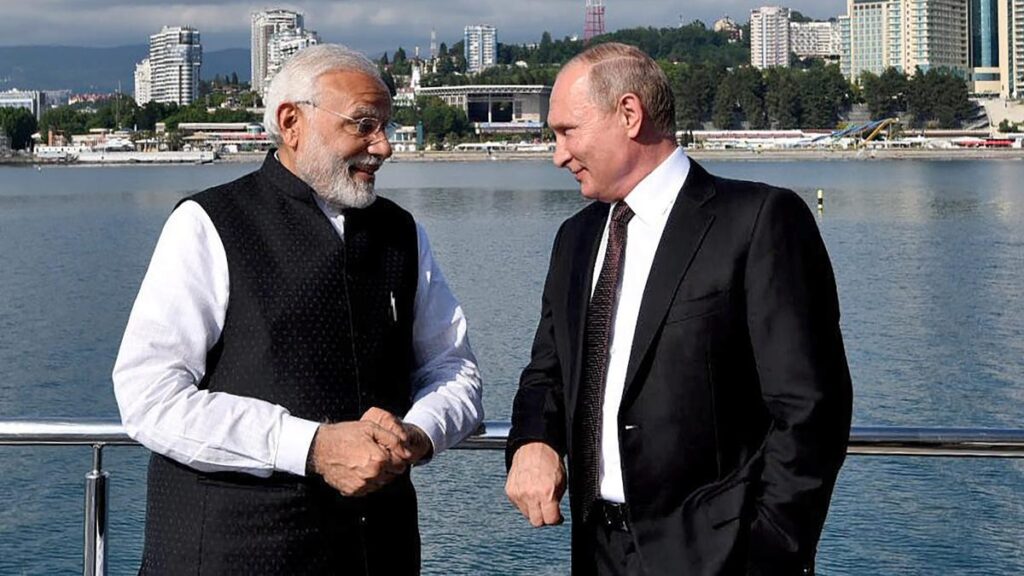
Boarding his special plane from Delhi to Moscow’s Vnukovo-II VIP airport, Prime Minister Narendra Modi said that he would discuss the full range of bilateral issues with his “friend Russian President Vladimir Putin” during his two-day 26-hour visit to Russia for the 22nd Annual Summit, including in the areas of “energy, security, trade, investment, health, education, culture, tourism and people-to-people exchanges,” also indicating the war in Ukraine is on the agenda for talks.
“I look forward to reviewing all aspects of bilateral cooperation with my friend President Vladimir Putin and sharing perspectives on various regional and global issues. We seek to play a supportive role for a peaceful and stable region,” Mr. Modi said.
What’s the schedule for Mr. Modi’s visit on July 8-9?
July 8
Arrival and Ceremonial welcome at airport in Moscow
Private dinner with Mr. Putin at his Dacha (Estate) in Novo-Ogaryovo suburb
July 9
Indian Community event, cultural performances by Russian students
Pay respects at Tomb of the Unknown Soldier, Red Square
Visit to “ATOM”, exhibition of Rosatom nuclear power developments and technology with President Putin
Formal Summit at Kremlin- review of bilateral issues, Ukraine war, global issues
Delegation-level talks and announcement of outcomes/agreements
Leave for Vienna, for bilateral talks, first visit by an Indian PM in 41 years
Editorial | Old traditions, new ties: On the importance of the India-Russia partnership
What’s on the agenda? 5 Points:
Geopolitical context of Visit, Timing of Summit
PM Modi is making his first visit to Russia since the war in Ukraine began in February 2022, his first bilateral visit abroad since he re-assumed office, and the first time the leaders are meeting for an annual summit since 2021. While MEA officials have said the visit must be seen in a “bilateral context”, it is a considerable show of Delhi’s support for ties with Moscow amidst the conflict, although Mr. Modi also met with Ukraine President Zelenskyy on the side-lines of the G-7 Outreach Summit last month. In addition, Russia’s growing dependence on China is something New Delhi will seek clarity on, given tensions in India-China ties since 2020, despite some Russian attempts at a patch-up between them at an RIC meeting shortly after the Galwan clash. The Modi-Putin formal talks will get underway in Moscow just as U.S. President Joe Biden hosts a special NATO summit with members of the Western sanctions coalition from the Indo-Pacific and Mr. Zelenskyy in Washington, which will seek to show Russia as “isolated”. All eyes will be on a possible “Joint Vision Statement” to set the course for future India-Russia ties.
Ukraine war and future of peace process
The leaders are meeting for the first time since 2022, when they met on the side-lines of the SCO in Uzbekistan and PM Modi said this “era is not of war”. President Putin did not, however, change the course of Russia’s war in Ukraine, and all eyes will be on what public message Mr. Modi sends out on the issue during the visit. India has several bilateral issues arising from the war, including dealing with food and fertilizer supplies as well as dealing with western sanctions. While no new major military deals are expected to be announced, both sides are expected to streamline the defence deals that have already been finalised and expedite deliveries that have been delayed, including for the S-400 systems and spares. A military logistical agreement called “RELOS” is also ready for signing, said sources, that will align military and naval cooperation across the region. New Delhi has made it clear it will raise the issue of Indian military recruits on the Russia-Ukraine frontlines and PM Modi is expected to ask a waiver of lengthy discharge processes so as to bring those wishing to return to India, home. At least two Indians have been killed so far, and about 50 recruits believed to be in the Army, while less than 10 have been allowed to return. The Russian military says its laws allow foreign recruits, and it has also received volunteers from Sri Lanka, Nepal, China, African countries and others- however a discharge must go through the Military Commission.
Trade and Payment mechanism
India and Russia trade figures have grown multi-fold since the war, due to India’s growing oil imports at discounted rates from Russian companies in the wake of sanctions. However, this has led to a major trade deficit, without about $60 billion in Indian imports versus only $4 billion in Indian exports in 2023-24. One issue will be in finding ways to encourage more Russian companies to buy Indian products, the other is to find a way to make payments that will not lead to sanctions on Indian banks facilitating them. Russian FM Lavrov said recently that India and Russia are moving to about “60% of bilateral trade payments” in national currencies as Russian Bank Sberbank has reported an improvement in payments last months with Indian companies opening accounts. A bilateral agreement on further facilitating payments is expected, even as the BRICS grouping is expected to discuss alternate payment systems within extended BRICS country currencies, this October.
Energy
Apart from seeking more predictable discounted rates on Russia’s Ural crude that Indian refineries, especially Russian ROSNEFT-controlled Vadinar in Gujarat, have refined in growing amounts over the past two years, PM Modi is expected to discuss long-term contracts for both oil and LNG during his talks with President Putin. India has increased its oil imports from Russia 20-times in just 2 years, and Indian oil PSUs may be offered more investment opportunities in Russian oil-fields and gas-fields, particularly in the eastern regions and Siberia.
Connectivity
India and Russia have been stepping up efforts on the International North South Transport Corridor (INSTC) via Iran’s Bandar-Abbas port, as well as the Chennai-Vladivostok Eastern maritime corridor and the North Sea Route to build India’s access to Russia and to the Artic as well. Both leaders are expected to announce an agreement on connectivity after their talks. However, last minute discussions on dealing with insurance and freight issues given western sanctions, as well as India’s concerns about dealing with some of the Chinese ports along the way are still continuing.