
In China, visiting Russian diplomat pushes for ‘peace and security’ amid Ukraine incursion
Source: South China Morning Post | Original Published At: 2024-08-18 12:00:14 UTC
Key Points
- Russian Deputy Foreign Minister Sergei Ryabkov met with Chinese officials to discuss peace and security amid the Ukraine conflict.
- China and Russia emphasized BRICS as a platform for global cooperation ahead of the Kazan summit.
- Beijing has increased diplomatic engagement with both Kyiv and Moscow in recent months.
- Ukraine's incursion into Kursk Oblast marks a new phase in the war, prompting China's special envoy to reach out to the Vatican.
- China declined to attend a Switzerland peace conference involving Russia and Ukraine.
“The two sides said that they will take the important consensus of the two heads of state as a fundamental guideline, deepen comprehensive strategic cooperation, and contribute to strengthening global strategic stability and promoting world peace and security,” according to China’s foreign ministry.
Russian Deputy Foreign Minister Sergei Ryabkov met his Chinese counterpart Ma Zhaoxu in Beijing on Friday, a month after the leaders of the two countries met at the Shanghai Cooperation Organisation summit in Kazakhstan.
A senior Russian diplomat vowed to promote “global peace and security” during a visit to China as Ukraine continues its incursion into Russia and Beijing pushes for more engagement with both Moscow and Kyiv.
The two diplomats also mentioned Brics – a bloc of emerging economies that includes China – whose next leaders’ summit will be held in Kazan, Russia in October.
“The two sides emphasised that Brics is an important platform for solidarity and cooperation among emerging markets and developing countries and that China and Russia will continue to closely communicate and collaborate to jointly promote the success of the Brics leaders’ meeting in Kazan,” the ministry added.
Chinese Vice-Premier He Lifeng will visit Moscow from Monday to Tuesday for a regular meeting and hold a talk with his Russian counterpart Dmitry Chernyshenko, according to China’s Ministry of Commerce.
Beijing has shown greater interest in intervening in the Ukraine war in recent months, and especially in increasing its engagement with Kyiv.
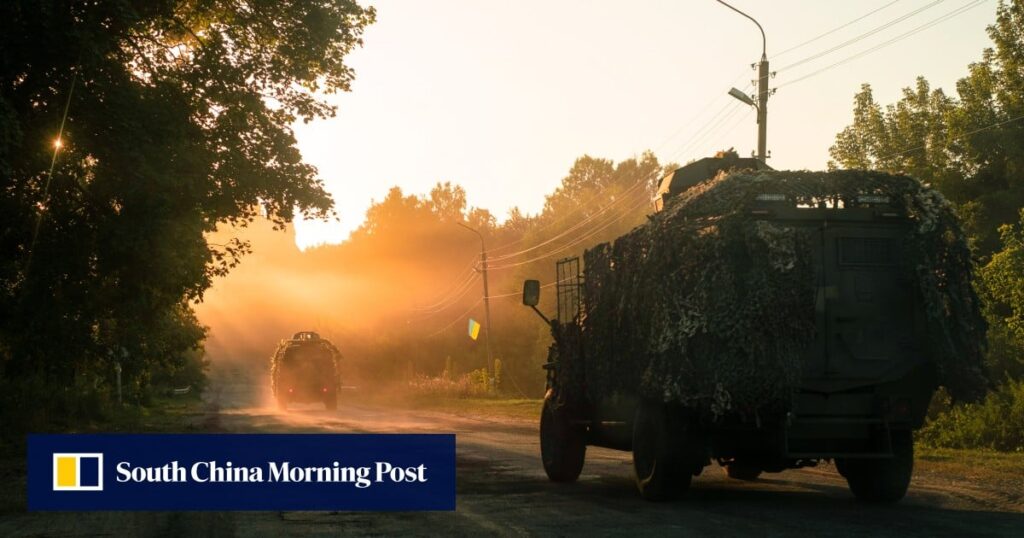
On August 6, the Ukrainian army crossed the border into the Russian territory of Kursk Oblast, marking a new phase of the war with Ukraine on the offensive.
Amid the escalation, China’s special peace envoy Li Hui called his Vatican counterpart Cardinal Matteo Zuppi earlier this week – a surprising move as Beijing and the Holy See do not have diplomatic relations.
Last month, Ukrainian Foreign Minister Dmytro Kuleba visited China and met his counterpart Wang Yi. Their meeting in China’s southern economic hub Guangzhou marked Kuleba’s first official visit to China since the war in Ukraine broke out in February 2022.
Wang said China would continue to promote a peaceful solution between Russia and Ukraine and send humanitarian aid to the latter.
In early July, Chinese President Xi Jinping met his Russian counterpart Vladimir Putin in Astana, Kazakhstan during the SCO summit.
Xi said the two countries should continuously “nurture the unique value of China-Russia relations and explore the endogenous dynamics of cooperation”.
Meanwhile, Putin said ties between the two nations had reached “a golden age”.
We have stated that Russian-Chinese relations of comprehensive partnership and strategic cooperation are in the best period of their history,” Putin said.
The war in Ukraine has killed at least 11,520 civilians and injured at least 23,640, according to a July report from the United Nations. Military personnel casualties number in the tens of thousands for both Ukraine and Russia.
In June, China decided not to attend a peace conference in Switzerland in which Russia and Ukraine took part, casting doubts on China’s willingness to help resolve the conflict with Western nations.