
From direct flights to trade, India-China talks yield broad breakthroughs
Source: Hindustan Times | Original Published At: 2025-08-19 20:02:40 UTC
Key Points
- India and China established expert groups under the WMCC to address border delimitation and management.
- Resumption of direct flights, updated air services agreement, and facilitation of visas for tourists, businesses, and media.
- Reopening of border trade through Lipulekh, Shipki, and Nathu La passes; easing FDI restrictions from China.
- Expansion of pilgrimage to Mount Kailash and Manasarovar from 2026.
- Cooperation on trans-border rivers, including hydrological data sharing during emergencies.
- Mutual support for BRICS summit presidencies (India in 2026, China in 2027).
- Commitment to multilateralism, WTO-based trade systems, and opposing unilateralism.
India and China on Tuesday unveiled a slew of initiatives to address their border dispute and normalise bilateral ties in the wake of the LAC standoff, ranging from steps to explore an “early harvest” in boundary delimitation to resumption of direct flights and facilitation of trade and investment flows. National Security Advisor Ajit Doval with China’s Foreign Minister Wang Yi in New Delhi on Tuesday. (PTI)
The measures were announced following visiting Chinese foreign minister Wang Yi’s talks with National Security Adviser (NSA) Ajit Doval under the Special Representatives mechanism and his meeting with external affairs minister S Jaishankar, and came ahead of Prime Minister Narendra Modi’s trip to China at the end of this month to attend the Shanghai Cooperation Organisation (SCO) Summit. The Prime Minister confirmed his presence in Tianjin after meeting Wang on Tuesday evening.
Both Doval and Wang pointed to steady progress in bilateral relations and easing of tensions on the border after the understanding last October to end the face-off on the Line of Actual Control, reflecting the growing thaw in ties amid geo-economic churn caused by the trade policies of the US administration.
At the meeting of the Special Representatives, the two sides agreed to create an expert group under the Working Mechanism for Consultation and Coordination (WMCC) on border affairs to explore “early harvest in boundary delimitation”, and to set up another working group under the WMCC to “advance effective border management” and maintain peace and tranquillity, the external affairs ministry said in a statement.
The two sides will create “general level mechanisms” for the eastern and middle sectors of the border, which cover Arunachal Pradesh and Uttarakhand, Himachal Pradesh and Sikkim, respectively. These will be in addition to the existing general level mechanism for the western sector, which covers Ladakh, the scene of the standoff which lasted well over four years. The two sides also agreed to hold an early meeting of the mechanism for the western sector.
The two sides further agreed to use diplomatic and military mechanisms to carry forward border management and discuss de-escalation, beginning with principles and modalities, the statement said.
India and China emphasised the need for a “political perspective of the overall bilateral relationship while seeking a fair, reasonable and mutually acceptable framework” for settling the border issue in line with the Agreement on Political Parameters and Guiding Principles for Settlement of the India-China Boundary Question signed in 2005, the statement added.
Several other initiatives were finalised at Wang’s meeting with Jaishankar on Monday, including resumption of direct flights “at the earliest” and finalisation of an updated air services agreement. Direct flights stopped during the Covid-19 pandemic and this continued after the face-off on the LAC. Both sides also agreed to facilitate visas for tourists, businesses, media and other visitors.
Besides reopening border trade through three designated points at Lipulekh pass, Shipki pass and Nathu La, both sides agreed to facilitate trade and investment flows between the two countries through concrete measures. India had restricted foreign direct investments from China through Press Note 3 in April 2020.
The two sides will also continue and expand the pilgrimage to Mount Kailash and Manasarovar lake in the Tibet region, starting from 2026. The pilgrimage resumed after a gap of five years in April.
The two sides agreed to “give full play to the role of India-China Expert Level Mechanism on Trans-border Rivers” and discuss the renewal of relevant MoUs. “The Chinese side agreed to share hydrological information during emergency situations based on humanitarian considerations,” the statement said against the backdrop of Indian concerns about China’s plan to build a mega dam in Tibet.
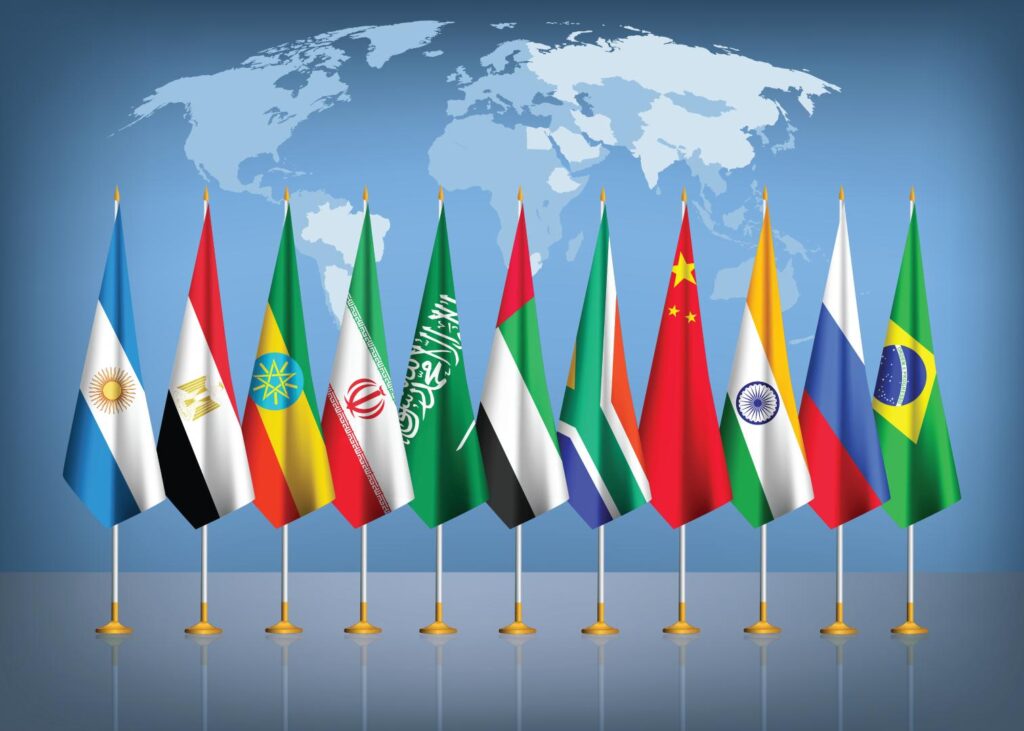
Both sides also agreed to support each other in hosting diplomatic events. For instance, China will support India’s presidency of Brics in 2026, and India will back China in hosting the 2027 Brics Summit. They will resume bilateral dialogue mechanisms and exchanges to address each other’s concerns and manage differences, including holding a meeting of the High-level Mechanism on People-to-People Exchanges in India in 2026.
The Chinese side welcomed Modi’s attendance at the upcoming SCO Summit in Tianjin, and the Indian side looked forward to a successful summit with fruitful outcomes. Both sides agreed a stable, cooperative and forward-looking relationship is in the mutual interest of both countries to “realise their development potential fully”.
India and China also agreed to uphold multilateralism, enhance communication on major international and regional issues, maintain a rules-based multilateral trading system with the WTO at its core, and promote a multipolar world that safeguards the interest of developing countries.
In what appeared to be a reference to the trade policies of the US administration, a Chinese foreign ministry statement quoted Wang as saying that the two sides reached consensus on “deepening mutually beneficial cooperation, upholding multilateralism, jointly addressing global challenges, and opposing unilateral bullying”.
Wang also said the two sides reached a new consensus on the border issue, including “properly handling sensitive points and initiating boundary demarcation negotiations where conditions permit”.
The 24th round of talks under the Special Representatives mechanism focused on “de-escalation, delimitation and boundary affairs”, the external affairs ministry said. Wang was quoted by the Chinese foreign ministry as saying that the two sides should “set goals in border control, demarcation negotiations and cross-border exchanges”.
Wang is the first Chinese minister to visit India since the two sides ended a standoff on the LAC last October and agreed to revive mechanisms to normalise ties. Both Doval and Wang acknowledged the Special Representatives’ meeting had assumed greater significance as it was held ahead of Modi’s visit to China for the SCO Summit.
Doval said India and China have benefited from peace and tranquillity on the border since the end of the face-off and made progress in various areas. Pointing to an “upward trend” in relations over the past nine months, he said: “Borders have been quiet, there has been peace and tranquillity, our bilateral engagements have been more substantial.”
Wang described the border situation as “stable and improving” and said the setbacks experienced by India and China in the past few years were not in the interests of the people of both sides. The meeting between Modi and President Xi Jinping in October last year “provided impetus for the proper settlement of the boundary question”, he added.
“We are heartened to see the stability that is now restored in the borders,” Wang said. “The Chinese side attaches great importance to the Prime Minister’s visit to China to attend the SCO Summit at our invitation.”
Despite the signs of a thaw, there were also indications of continuing concerns on the Indian side, including cross-border terrorism emanating from Pakistan, a close ally of China, and Beijing’s plans to build what will be the world’s largest hydropower dam in Tibet that could affect the flows in the Brahmaputra river.
The Indian side strongly raised all forms of terrorism, including cross-border terrorism, while recalling that one of the original objectives of the SCO, which is currently led by China, was to counter the “evil of terrorism”, the external affairs ministry said in a statement. Wang “concurred that countering terrorism should be given the highest priority”, the statement added.
External affairs minister S Jaishankar, who met Wang on Monday, “underlined India’s concerns with regard to the mega dam construction being undertaken by China in the lower reaches of the Yarlung Tsangpo (Brahmaputra river), which will have implications for lower riparian states,” the statement said.
Jaishankar strongly underlined the “need for utmost transparency” on this project, it added.
The two Special Representatives met even as a senior Indian government official said Wang had assured Jaishankar at their meeting on Monday that China is addressing India’s concerns regarding restrictions on the export of rare earth minerals, fertilisers and large tunnel boring machines.