
Burden and forecast of severe periodontitis in BRICS-Plus nations: trends from 1990 to 2040
Source: International Journal for Equity in Health | Original Published At: 2025-10-31 08:41:54 UTC
Key Points
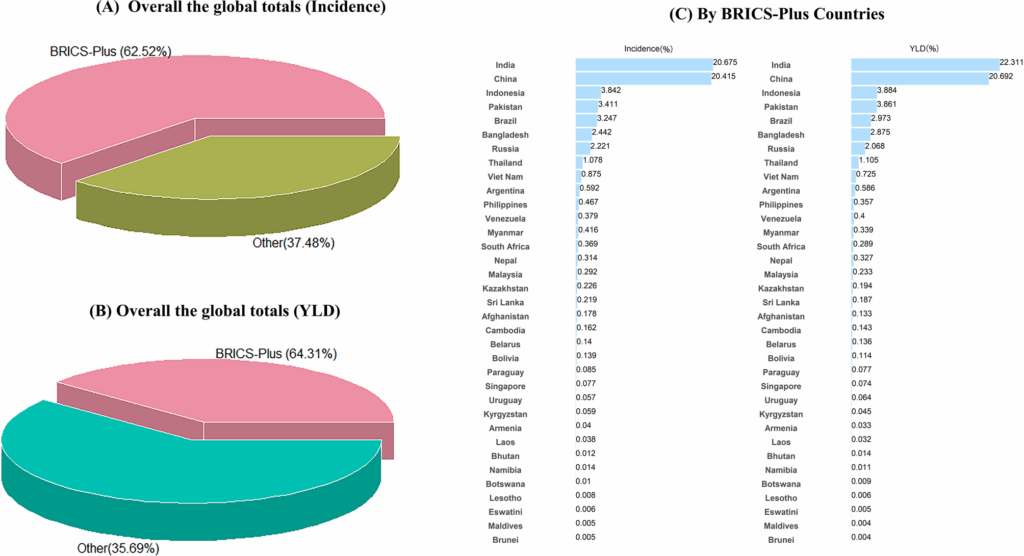
- BRICS-Plus nations accounted for 62.52% of global severe periodontitis cases and 64.31% of YLDs in 2021
- Laos showed the sharpest historical increases (incidence EAPC=1.33%, YLD EAPC=1.62%) and projected growth through 2040
- Mercosur and SAARC regions had highest age-standardized burdens, while SACU had lowest
- 40-60-year-olds identified as high-risk group across most BRICS-Plus nations
- Over half of BRICS-Plus nations may experience declining trends by 2040 with targeted interventions
Background
Severe periodontitis is a global public health challenge, disproportionately affecting low- and middle-income countries. BRICS-Plus nations (35 emerging economies representing > 50% world population) face unique pressures from socioeconomic inequalities and aging populations, yet their epidemiological trends remain understudied. This study aims to quantify the burden of severe periodontitis and project future trends in these nations.
Methods
Using data from the Global Burden of Disease Study 2021 (GBD 2021), we analyzed historical trends (1990–2021) of incidence and years lived with disability (YLDs) via the estimated annual percentage change (EAPC). A Bayesian age-period-cohort (BAPC) model was used to generate future projections (2022–2040) that comprehensively account for age, period, and cohort effects.
Results
In 2021, BRICS-Plus contributed 62.52% of global incident cases (89.61 million) and 64.31% of YLDs (6.90 million). Regional disparities were pronounced: Mercosur and SAARC showed the highest age-standardized burdens (incidence: 1132.20/100,000; YLD: 95.52/100,000), while SACU had the lowest (incidence: 600.50/100,000; YLD: 36.78/100,000). Laos exhibited the sharpest historical rises (incidence EAPC = 1.33, 95%CI: 1.02 to 1.65; YLD EAPC = 1.62, 95%CI: 1.18 to 2.06). BAPC projections indicate sustained growth in Laos, with 40–60-year-olds remaining as the high-risk group, while over half of BRICS-Plus nations may experience downward trends by 2040.
Conclusions
Severe periodontitis exhibits divergent trends across BRICS-Plus, with Laos facing escalating burden while most nations show projected declines. Implementing targeted interventions—including tailored dental healthcare strengthening in high-prevalence regions and evidence-based preventive strategies targeting vulnerable middle-aged demographics—is essential for effectively addressing these divergent trends and reducing the overall disease burden.