
Source: ThePrint | Original Published At: 2025-11-19 13:33:12 UTC
Key Points
- China allegedly conducted a disinformation campaign using AI and fake social media accounts to undermine French Rafale jet sales to Indonesia and promote its own J-35 jets.
- Pakistan claimed to have downed Rafale jets during Operation Sindoor, which India partially disputed.
- Indonesia plans to purchase Chinese J-10C fighter jets despite ongoing Rafale deliveries from France.
- China provided potential live intelligence support to Pakistan during the 2025 India-Pakistan conflict.
- The US-China Economic and Security Review Commission highlights India-China diplomatic engagements in 2025 as 'conceptual' with limited concrete outcomes.
- India and China expanded economic ties in 2025, including Chinese export licenses for Indian firms.
- India, China, and Russia jointly condemned US-Israeli actions in the 2025 SCO Joint Declaration.
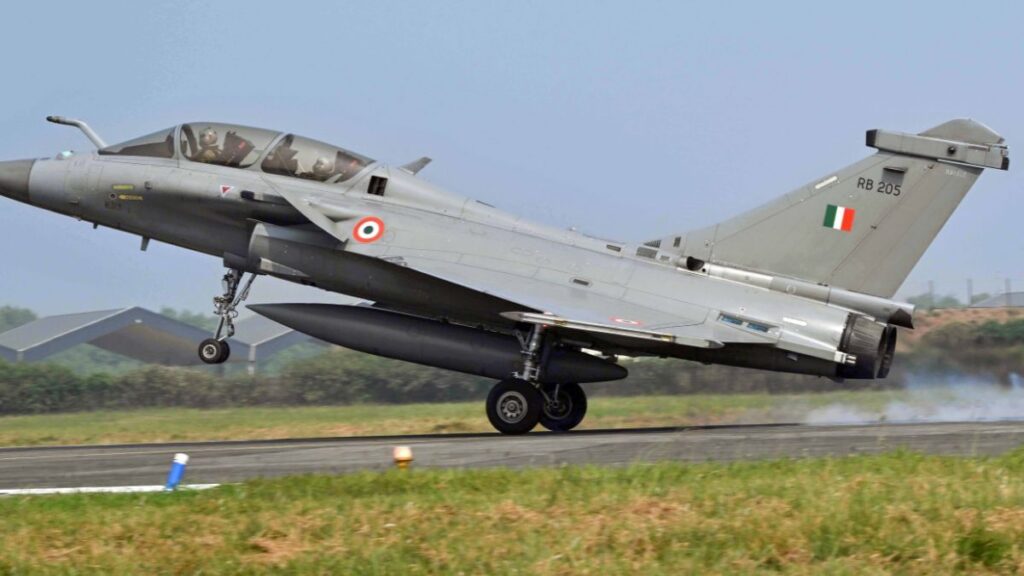
The report added: ‘According to French intelligence, China initiated a disinformation campaign to hinder sales of French Rafales in favour of its own J-35s, and it used fake social media accounts to propagate AI and video game images of supposed “debris” from the planes China’s weaponry destroyed.’
In the immediate aftermath of Operation Sindoor, Pakistan has repeatedly claimed to have downed a number of Rafale fighters. India has not released a list of lost equipment as Operation Sindoor has not ended; however, it has accepted that there were some ‘losses’ while rejecting Islamabad’s claims of downing six Indian jets.
According to the US-China Economic and Security Review Commission, Beijing was attempting to convince Indonesia to halt its purchase of 42 Rafale jets, which are set to be delivered to Jakarta next year.
While the deliveries of the Rafale jets to Jakarta are set to continue, the Indonesian government last month confirmed that it is looking to purchase Chinese-made J-10C fighter jets to add to its growing fleet of military aircraft.
China’s role in Pakistan’s military is not only as its primary arms supplier. Beijing also potentially provided live intelligence inputs to Islamabad during the 87-hour India-Pakistan conflict, according to reports.
The US-China Economic and Security Review Commission was established by the US Congress in October 2000 to monitor, evaluate and investigate the national security implications of the trade and economic relationship between Washington, D.C. and Beijing. Every year, the Commission releases an annual report of its findings to the US Congress.
India-China thaw ‘conceptual’
While India and China have made several announcements, indicating that the two governments are working on improving ties in the last year, the commission notes that the high-level engagements have led to a number of announcements with ‘few specifics or follow-ups’.
‘Throughout 2025, high-level meetings took place between China and India as both sought to de-escalate tensions…. While the October 2024 China-India border patrolling agreement yielded a short-term thaw in tensions, both sides continued militarising the border in early 2025, building new airbases and shoring up positions along the LAC and near Arunachal Pradesh,’ said the report.
It added: ‘As of September 2025, though, the terms of economic cooperation or border resolution agreements were largely conceptual, with few specifics or follow-ups announced by either side.’
Ties soured between India and China, following the clashes at Galwan in the summer months of 2020. India maintained that peace and tranquillity at the border were a necessary condition before other areas of ties could move forward.
In October 2024, Indian Foreign Secretary Vikram Misri announced that New Delhi and Beijing had reached an agreement to disengage at the friction points across the Line of Actual Control (LAC). The agreement paved the way for Prime Minister Narendra Modi to meet Chinese President Xi Jinping at the 2024 BRICS Summit in the Russian city of Kazan.
In August 2025, Modi travelled to China’s Tianjin to attend the Shanghai Cooperation Organisation Heads of States Summit. Modi also held a bilateral meeting with Xi Jinping. The visit to China in August had come amid a downturn in ties between India and the US over trade, with the US imposing 50 percent tariffs on Indian goods.
The engagements in the last year have seen both countries look to expand their economic relationship. China, for example, gave export licenses to at least four Indian firms to export magnets.
‘It remains to be seen whether China’s and India’s 2025 commitments are a short-term function of India’s desire to hedge against tumult in trade negotiations with the United States or are a long-term shift toward normalisation in bilateral relations,’ the report noted.
One of the outcomes of the thaw in ties between India and China was seen with New Delhi criticising the US for the first time this year for its support to Israel in the Joint Declaration at the end of the SCO’s Heads of States’ summit. The declaration also condemned the terrorist attack at Pahalgam in India’s Jammu and Kashmir earlier this year—an important diplomatic position for New Delhi.
The Joint Declaration, spearheaded by China, the country holding the SCO presidency, was a moment where India, China, and Russia showed a ‘united front’. And, they showed their willingness to compromise on issues, the commission report highlights.
‘The three countries signed on to a declaration condemning the US and Israeli bombing of Iran and the ‘actions that have led to… a catastrophic humanitarian situation in the Gaza Strip,’…The declaration also condemned the 2025 Pahalgam terrorist attack that India attributes to Pakistan, a symbolically important gesture for India,’ said the report.
(Edited by Madhurita Goswami)