
Can BRICS Turn the New Delhi Declaration into Real Economic Leverage Against Protectionism and the Dollar?
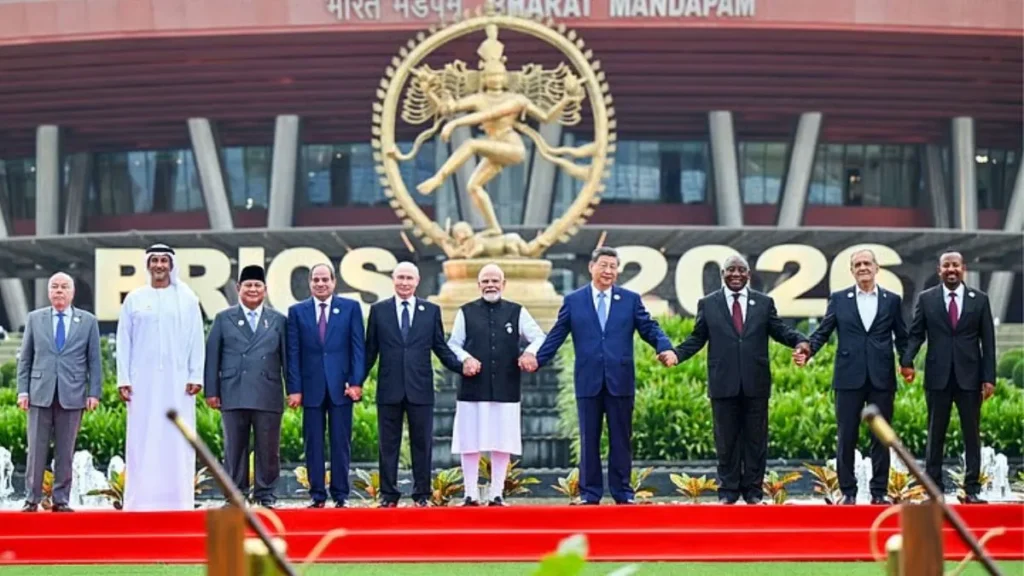
Cooperation areas
Source: The Financial Express | Original Published At: 2026-09-14 07:07:32 UTC
Key Points
- The 18th BRICS Summit, held in New Delhi under India's chairship, ended with a 140-paragraph New Delhi Declaration.
- The declaration called for a stronger global trading system, opposed unilateral tariffs and sanctions, and supported greater use of local currencies for trade and investment.
- BRICS criticized carbon border adjustment mechanisms, including the European Union's CBAM, as discriminatory and protectionist.
- The declaration supported WTO reform, restoration of the dispute settlement system, Most-Favoured-Nation treatment, and Special and Differential Treatment for developing economies.
- BRICS trade was around $1.17 trillion in 2024, but the group lacks a common BRICS currency or single payment system to replace existing international financial arrangements.
- The New Development Bank plans to raise local-currency lending to 40-50% during 2027-2031 and announced a $7.5 billion five-year commitment to India, including a rupee bond programme.
- Other BRICS initiatives include a proposed Grain Exchange, critical minerals cooperation, SME support, customs cooperation, and India's proposed BRICS Risk Lab at GIFT City.