
Voice of the Global South: Can BRICS Do More Than Vocalize a Vision for the World Order?
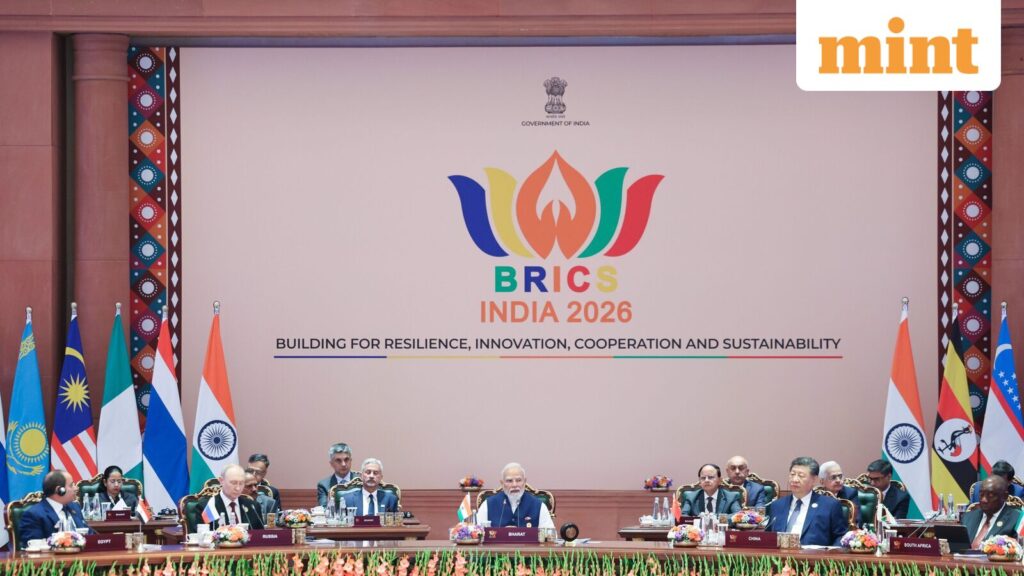
Source: Livemint | Original Published At: 2026-09-15 06:30:08 UTC
Key Points
- BRICS expanded to 11 member countries after the post-2023 accession of Egypt, Ethiopia, Iran, the United Arab Emirates, Saudi Arabia, and Indonesia, increasing its global weight but making consensus more difficult.
- The article argues that BRICS faces a central paradox: its geopolitical relevance is growing even as internal coherence becomes harder to sustain.
- India's 2026 chairship and the New Delhi Declaration are presented as emphasizing development issues such as health, food and energy security, technology, artificial intelligence, digital public infrastructure, critical minerals, supply chains, and financial cooperation.
- The piece states that BRICS is neither a military alliance nor a unified economic bloc, noting that the New Development Bank remains small compared with the World Bank and that de-dollarization efforts are evolutionary rather than revolutionary.
- It highlights competing visions within BRICS, with China and Russia seen as more inclined toward restructuring the international order, while India, Brazil, and others focus more on development, representation, and strategic autonomy.
- The article suggests that BRICS is becoming a platform for a more assertive Global South seeking greater agency without necessarily choosing sides in great-power rivalry.