
BRICS Summit in New Delhi: New Balances and Divisions in the Shadow of the War with Iran
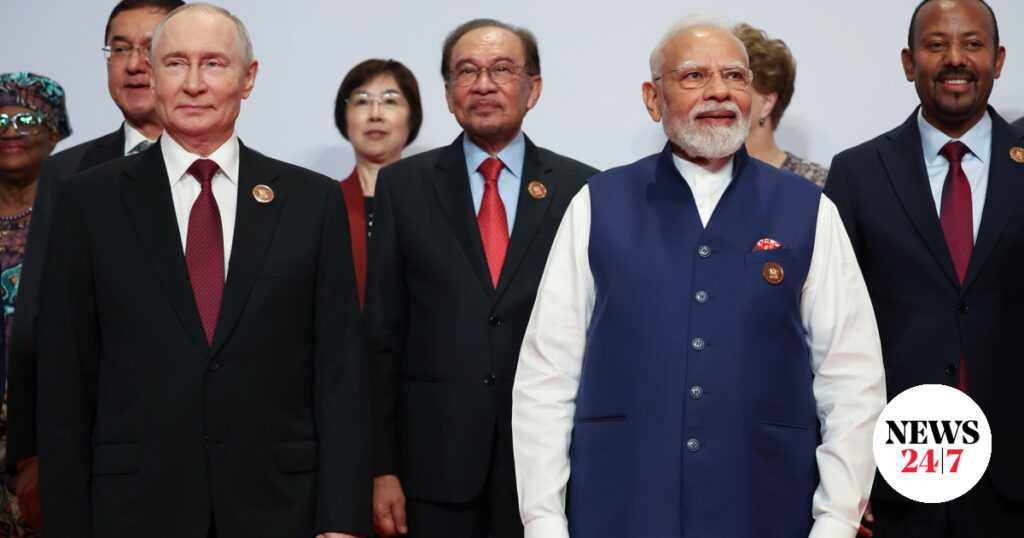
Source: NEWS 24/7 | Original Published At: 2026-09-13 14:00:02 UTC
Key Points
- The BRICS summit in New Delhi brought together leaders including India's Prime Minister Narendra Modi, China's President Xi Jinping, Russia's President Vladimir Putin, Iran's President Masoud Pezeshkian, Abu Dhabi Crown Prince Sheikh Khalid bin Mohammed bin Zayed Al Nahyan, and South Africa's President Cyril Ramaphosa.
- The summit produced a joint Delhi Declaration despite earlier ministerial failures, but it avoided naming countries or taking firm positions on contentious issues such as the Middle East conflict and Russia's war in Ukraine.
- India sought to present BRICS as a platform for strategic autonomy rather than an anti-Western bloc, while China, Russia, and Iran view the group as a means to limit U.S. and Western European influence.
- The declaration called for maximum restraint in the Middle East, condemned attacks on civilian infrastructure and peaceful nuclear facilities without assigning blame, and reiterated support for a two-state solution.
- Iran used the summit to seek deeper economic ties with BRICS members amid U.S. pressure and held high-level talks with the United Arab Emirates; Xi and Modi met for the first time in seven years and agreed to enhance trade and transport links.
- The summit showed that BRICS can provide a space for dialogue among rival members, but it left unresolved how the group will shape a new global order.