
BRICS 2026: Why Did the Delhi Summit Become a Stage for Contradictions?
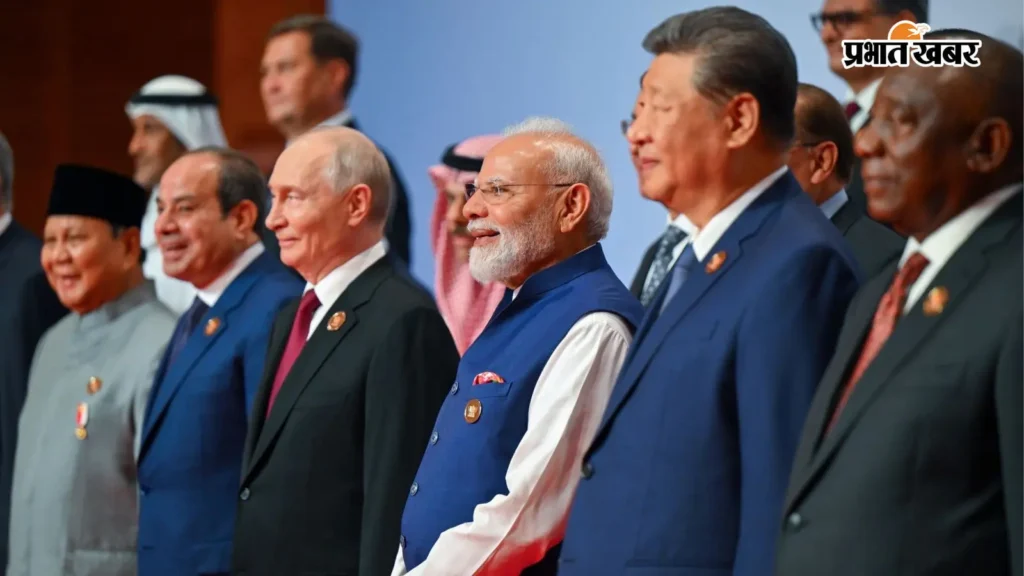
Source: प्रभात खबर | Original Published At: 2026-09-14 00:24:11 UTC
Key Points
- The New Delhi Declaration adopted consensus language on the West Asia conflict, emphasizing maximum restraint, dialogue, and diplomacy despite differences between Iran and the UAE.
- India and China used the BRICS platform to promote multipolarity and a stronger Global South role while continuing strategic competition over border, trade, influence, and the Indo-Pacific.
- Russia treated the Delhi summit as an important source of diplomatic legitimacy amid Western isolation after the Ukraine war, while India maintained bilateral cooperation with Russia in energy, defence, space, and trade without endorsing all Russian geopolitical positions.
- India’s approach to BRICS focused on reforming global institutions, expanding local-currency trade, and questioning Western-dominated financial architecture while preserving its strategic and economic relations with the United States.
- De-dollarisation remained framed as an incremental process: BRICS members are pursuing local-currency trade and cross-border payment cooperation, but the global financial system remains deeply linked to the dollar.
- BRICS expansion to 11 members increased geographic reach and representativeness, but also made consensus more complex because of divergent national interests among members.
- The summit’s key achievement was bringing diverse countries into a joint declaration and facilitating Iran-UAE diplomatic engagement, showing BRICS as a negotiating space rather than a traditional alliance.