
BRICS @20: From a club of emerging economies to a platform for a changing world
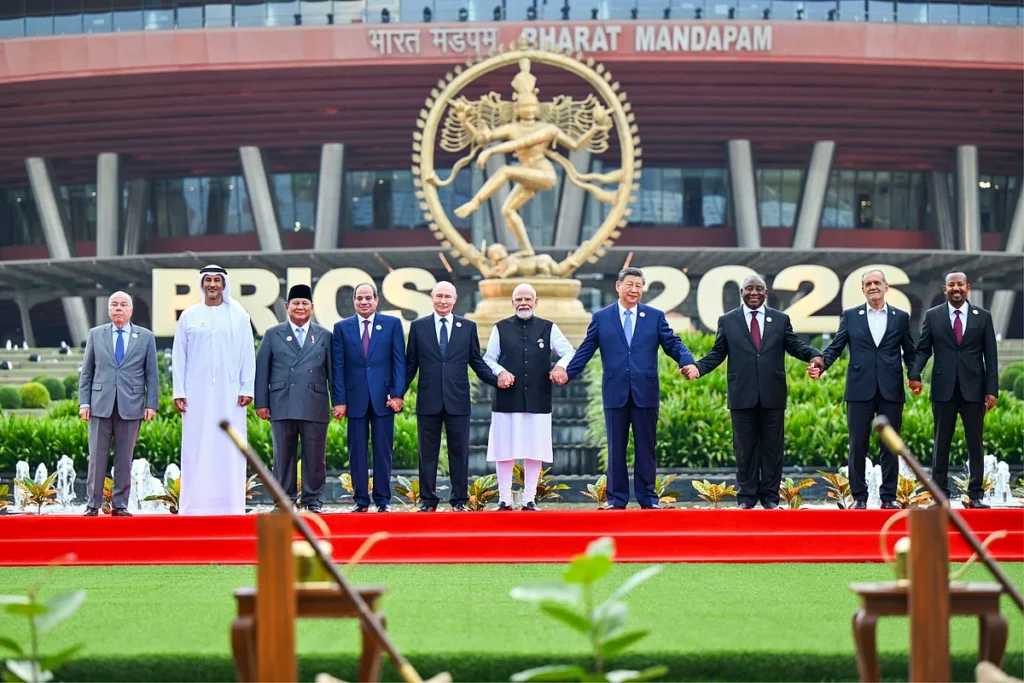
Source: The New Indian Express | Original Published At: 2026-09-12 15:22:14 UTC
Key Points
- BRICS has expanded from four founding members to 11 members and 10 partner countries, collectively representing almost half the world's population, about 40 percent of global GDP and more than a quarter of global trade.
- The New Delhi Declaration frames BRICS as a cooperation platform for trade, finance, technology, development, climate, energy, health, agriculture, infrastructure and global governance.
- BRICS calls for a more representative international order, reaffirms the centrality of the United Nations, and supports WTO reform, including restoring a functioning dispute-settlement system.
- The declaration supports practical economic measures such as MSME internationalisation, improved trade finance, an invoice-discounting mechanism for BRICS members, payment interoperability and greater use of local currencies.
- The New Development Bank is highlighted as a key institution for expanding local-currency financing, mobilising resources, supporting infrastructure and sustainable development, and strengthening institutional resilience.
- BRICS is advancing cooperation on artificial intelligence governance, digital public infrastructure, cybersecurity, quantum technologies, climate finance, energy transition and critical-mineral supply chains.
- The article notes that BRICS' diversity and the exploratory nature of many initiatives make implementation the main test of whether declarations translate into tangible outcomes.