
BRICS New Delhi Summit and Re-emergence of RIC Axis Despite Inherent Contradictions
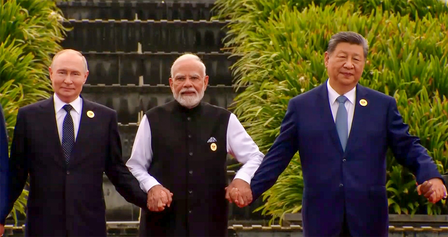
Source: Lokmat Times | Original Published At: 2026-09-12 17:06:59 UTC
Key Points
- The 2026 BRICS New Delhi Summit has brought the Russia-India-China (RIC) axis back into the geopolitical spotlight.
- BRICS has transformed the RIC dialogue from a trilateral mechanism into a broader multilateral platform involving emerging powers such as Brazil, South Africa, Iran, Egypt, Ethiopia and the United Arab Emirates.
- India and China continue to face border disputes and trade imbalances, but Western economic pressures have created incentives for tactical convergence within BRICS.
- BRICS provides a buffer for managing RIC tensions through cooperation on trade, climate change and reform of international financial institutions.
- The expanded BRICS represents more than 40 percent of the world’s population and a growing share of global GDP, increasing South Asia’s exposure to new markets, infrastructure financing and collective technology and energy initiatives.
- The New Delhi Declaration is expected to influence South Asia by shaping economic opportunities and regional security narratives related to global conflicts and Western-led institutions.
- The durability of the RIC axis depends on whether India and China can manage their rivalry within BRICS and whether Russia can maintain enough independence to balance the triangle.