
World’s biggest handshake at BRICS: Can it shake the world order?
Cooperation areas
Source: The Economic Times | Original Published At: 2026-09-12 07:47:00 UTC
Key Points
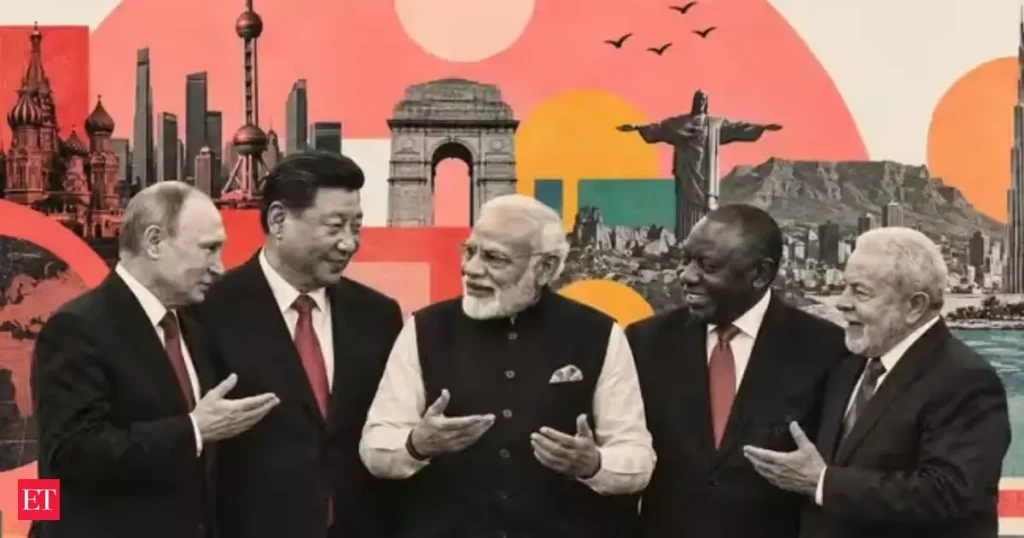
- Prime Minister Narendra Modi, President Xi Jinping and President Vladimir Putin meet in New Delhi for a BRICS summit, with Xi making his first India visit in seven years and Putin attending his first summit outside Russia since the invasion of Ukraine.
- Expanded BRICS has 11 members and accounts for about 49% of the world’s population, 39% of global GDP and 23% of international trade, but it has no treaty, permanent secretariat or common budget and operates by consensus.
- Members failed to issue a joint statement at the May 2026 foreign ministers’ meeting in New Delhi, reflecting internal divisions including differences between Iran and the United Arab Emirates.
- Russia is pushing BRICS toward more practical cooperation in technology, infrastructure, investment and payments, while China seeks greater influence in global institutions and reduced dependence on dollar-based finance.
- India views BRICS as an instrument of strategic autonomy alongside other groupings such as the Quad and G20, rather than as an anti-American bloc.
- The India-China thaw is a key test for BRICS effectiveness, with border disengagement, resumed flights, eased visa restrictions and some relaxation of investment controls, although strategic and territorial concerns remain.
- BRICS financial cooperation focuses on national-currency trade settlement, payment-system interoperability, central-bank digital currencies and expanding the New Development Bank, which has approved about $42.9 billion for 139 projects.