
Ghana Backs Homegrown AI Platform as Defense Against Digital Colonialism
Source: News Ghana | Original Published At: 2025-11-08 09:47:49 UTC
Key Points
- Ghana prioritizes homegrown AI solutions to counter digital colonialism and data extraction by foreign entities
- Dodo Technologies' AI platform to unify communication systems developed entirely in Ghana
- National AI Strategy emphasizes training AI on local datasets to avoid biases in foreign models
- Emerging Technology Bill under development to regulate AI, blockchain, and quantum computing
- Ghana seeks BRICS AI Center collaboration for joint research and global governance participation
- Data sovereignty initiatives include 2012 Data Protection Act updates and infrastructure investments
- One Million Coders Program aims to build domestic digital workforce capabilities
Minister for Communication, Digital Technology and Innovations Samuel Nartey George has reaffirmed government commitment to advancing homegrown Artificial Intelligence (AI) solutions, positioning local innovation as critical defense against what experts warn represents a new form of colonial extraction through foreign data harvesting.
George made the remarks when officials from Dodo Technologies Limited, a Ghanaian AI and communication technology company, briefed him on preparations for Dodo Summit 2025, scheduled December 10 at the University of Professional Studies, Accra (UPSA) Auditorium. The meeting signals Ghana’s determination to avoid becoming what the Pan African Parliament recently warned against, a digital colony where foreign corporations control data infrastructure and AI systems.
The timing reflects urgent concerns across African leadership. Over 80 percent of African data currently flows through infrastructure controlled by foreign entities, primarily Amazon Web Services, Microsoft Azure, and Google Cloud. These platforms subject African information to external legal frameworks, undermining sovereignty and enabling what scholars term algorithmic colonialism.
George commended Dodo Technologies for developing indigenous digital tools to address communication challenges across sectors. He directed the company to collaborate with the Ministry’s Director of Innovations, Emmanuel Ofori, for technical assessment and potential pilot testing within the public sector.
He stated that empowering local innovators aligns with government vision to build a self reliant and inclusive digital economy founded on data sovereignty, innovation, and digital governance. The statement connects directly to Ghana’s National AI Strategy, which emphasizes training AI systems on local datasets rather than relying on foreign models that ignore African realities.
Kane Mani, Co founder and Chief Executive Officer of Dodo Technologies, briefed the Minister on company efforts to end fragmented communication through an AI platform designed to unify internal communication, customer engagement, and public interaction. According to Mani, the technology was developed entirely in Ghana, reflecting the country’s growing capacity for technological excellence.
The Dodo Summit 2025 theme, The End of Fragmented Communication, will bring together policymakers, private sector leaders, innovators, and technology enthusiasts to explore AI policy, digital governance, and the future of communication in Africa. The gathering represents part of Ghana’s broader strategy to position itself as Africa’s AI hub by 2028, an ambition George announced to Parliament in January.
The Minister previously warned that AI models trained solely on foreign datasets risk overlooking Indigenous knowledge and reinforcing learned biases that do not serve African interests. By anchoring AI development in local data, Ghana aims to safeguard digital sovereignty and build technologies that are truly Ghanaian in design and purpose.
This philosophy responds to research showing 60 percent of African AI developers currently rely on Western built models, limiting local agency in development. Foreign AI systems trained on datasets from Europe and North America frequently fail to capture linguistic and cultural nuances of African contexts, leading to biased algorithms that reinforce existing inequalities.
The consequences extend across multiple sectors. Credit scoring algorithms developed from Western financial data cannot assess creditworthiness based on African financial behaviors, excluding millions from digital financial services. Educational AI systems struggle with African languages’ tonal variations and contextual meanings. Healthcare diagnostics trained on predominantly white populations misidentify conditions in Black patients.
George has positioned Ghana’s approach within what he calls a Reparations Agenda, describing technological sovereignty as essential to restoring Africa’s ability to control its own digital future. The Ministry has drafted an Emerging Technology Bill, currently under stakeholder review, that will establish legal and regulatory foundations for responsible innovation in AI, blockchain, and quantum computing once approved by Cabinet and Parliament.
The legislation forms part of comprehensive infrastructure including Ghana’s National AI Strategy, which provides roadmaps for ethical, inclusive AI deployment. The strategy focuses on building robust digital infrastructure and data governance systems, supporting AI research and startups, promoting digital literacy and workforce readiness, and ensuring ethical standards that protect national interests.
Ghana’s Cabinet underwent the country’s first AI Boot Camp for Ministers earlier this year, an initiative George explained was designed to deepen executive understanding of AI’s potential and implications for national development. The training informed a presidential directive mandating all Ministries, Departments, and Agencies integrate AI use into their operations.
The government simultaneously launched the One Million Coders Program in April, a national initiative aimed at equipping Ghana’s youth with digital skills needed to thrive in the global digital economy. George emphasized the program is deeply embedded within the National AI Strategy, ensuring human capital development aligns with digital policy and infrastructure investments.
These initiatives respond to warnings from multiple African institutions about data extractivism. The African Union reports over 80 percent of African data is stored outside the continent, primarily in Europe and North America. The Africa Data Centres Association estimates Africa requires between 1.4 and 3.5 million square meters of data center space to meet current needs.
The Democratic Republic of Congo supplies roughly 70 percent of the world’s cobalt, critical for AI servers, smartphones, and electric vehicles. African minerals power global AI infrastructure while the continent remains largely absent from AI governance discussions. Experts argue this parallels historical colonial extraction, where raw materials were seized, refined abroad, then sold back to source nations.
Professor Mirjam van Reisen of Leiden and Tilburg Universities told the Pan African Parliament in July that Africa should become the first continent fully data sovereign, using African data and legacy to shape African Intelligence for AI while avoiding digital colonialism. She emphasized this approach would leverage AI for African led growth and problem solving.
The Ghana government’s support for Dodo Technologies reflects practical application of these principles. By providing regulatory pathways and pilot opportunities for locally developed AI platforms, the Ministry creates incentives for Ghanaian innovators to build solutions addressing domestic challenges with culturally appropriate technologies.
Industry observers note Ghana’s regulatory readiness positions it advantageously. The country implemented its Data Protection Act in 2012, one of Africa’s earliest comprehensive data protection frameworks. Recent updates strengthen provisions for cross border data flows and AI governance, establishing legal foundations other African nations now seek to replicate.
The meeting between George and Dodo Technologies comes as global AI governance frameworks solidify without adequate African representation. The European Union finalized its AI Act establishing trustworthy AI standards. The United States unveiled its AI Action Plan for technological leadership. China built an AI ecosystem rooted in sovereignty and strategic autonomy. Africa’s 1.4 billion people remain largely excluded from these decision making tables.
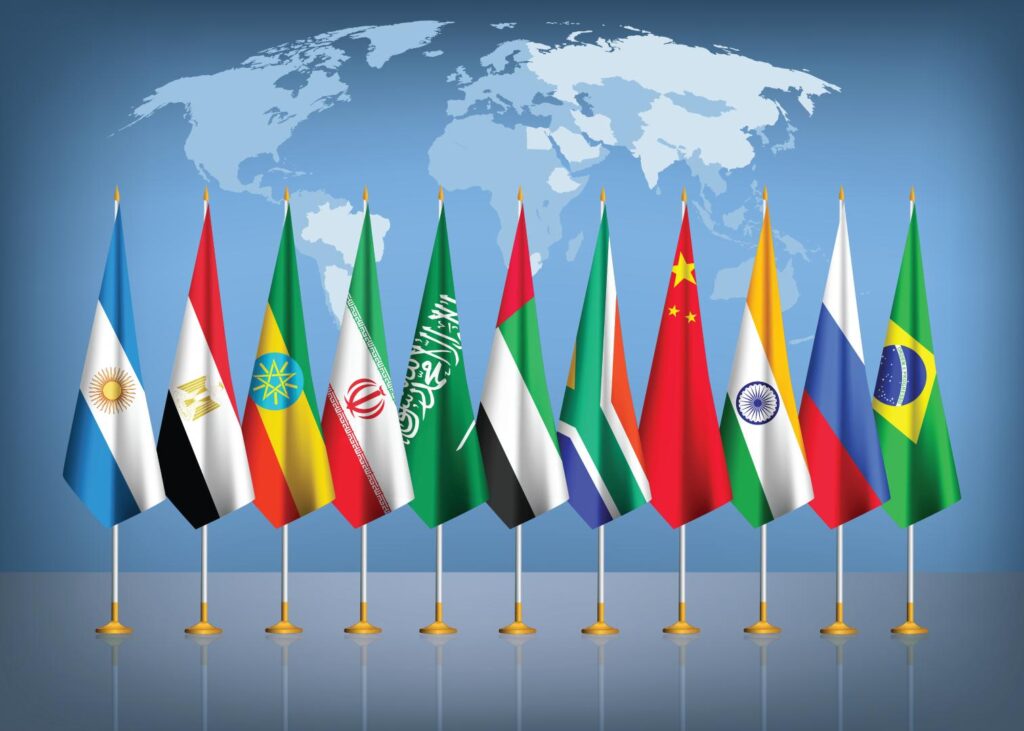
Ghana aims to change this dynamic through strategic partnerships. The Minister has indicated interest in collaboration with the BRICS AI Center in Shanghai, where Ghanaian researchers and startups could access advanced computing resources, join joint research programs, and codevelop tools tailored to African realities. More importantly, participation would give Ghana voice in shaping ethical and technical norms guiding AI’s future.
The Dodo Summit will provide platform for advancing these discussions. Organizers expect the December event to catalyze policy recommendations on AI deployment, data protection standards, and frameworks for evaluating indigenous technology platforms. Outcomes could inform both Ghana’s Emerging Technology Bill and broader African Union initiatives on digital sovereignty.
Success of platforms like Dodo Technologies carries implications beyond communication efficiency. Each locally developed AI system trained on Ghanaian data represents an assertion of technological autonomy, a refusal to accept permanent subordination in the global digital economy where Africa supplies raw materials and data while others control the infrastructure determining how AI interprets African realities.
George previously stated that AI in 2025 is like Bitcoin in 2013, highlighting the transformative nature of the technology and the urgency of establishing sovereign capabilities before external actors cement control. The Minister emphasized Ghana must not just participate in the AI revolution but lead it, ensuring policies drive financial inclusion, catalyze job creation, and prepare Ghana’s workforce for the digital age.
The government’s emphasis on indigenous technology development reflects recognition that digital sovereignty requires more than policy frameworks. True independence demands African owned satellites, diverse undersea cable routes, locally controlled cloud systems, and technical capacity including engineers, cybersecurity experts, and data scientists able to maintain and defend critical infrastructure.
The March 2024 failure of three undersea cables plunged West and Central Africa into near blackout, crippling banks, hospitals, telecommunications, and public services. Even Accra’s state of the art data centers, built with foreign capital and Huawei technology, could not provide insulation. The incident demonstrated how infrastructure dependency can paralyze entire economies overnight.
These realities inform Ghana’s support for companies like Dodo Technologies. By investing in local innovators and providing regulatory pathways for homegrown platforms, the government aims to build resilient systems less vulnerable to external disruption while creating frameworks ensuring AI development reflects Ghanaian values, languages, and cultural contexts.
The meeting touched on Ghana’s increasing emphasis on indigenous technology development as driver of innovation, productivity, and competitiveness in the digital economy. Officials indicated they view locally developed AI platforms as essential components of broader digital transformation rather than optional enhancements to foreign dominated infrastructure.
As Ghana positions itself to become Africa’s AI hub by 2028, initiatives supporting companies like Dodo Technologies will likely proliferate. The government must balance encouraging innovation with establishing robust governance frameworks preventing exploitation while ensuring technologies serve public interest alongside commercial objectives.